RAED brings civil society’s perspective on water security to Cairo Water Week 2026
Emad Adly calls for wider cooperation and the integration of nature-based solutions into water management and climate adaptation.
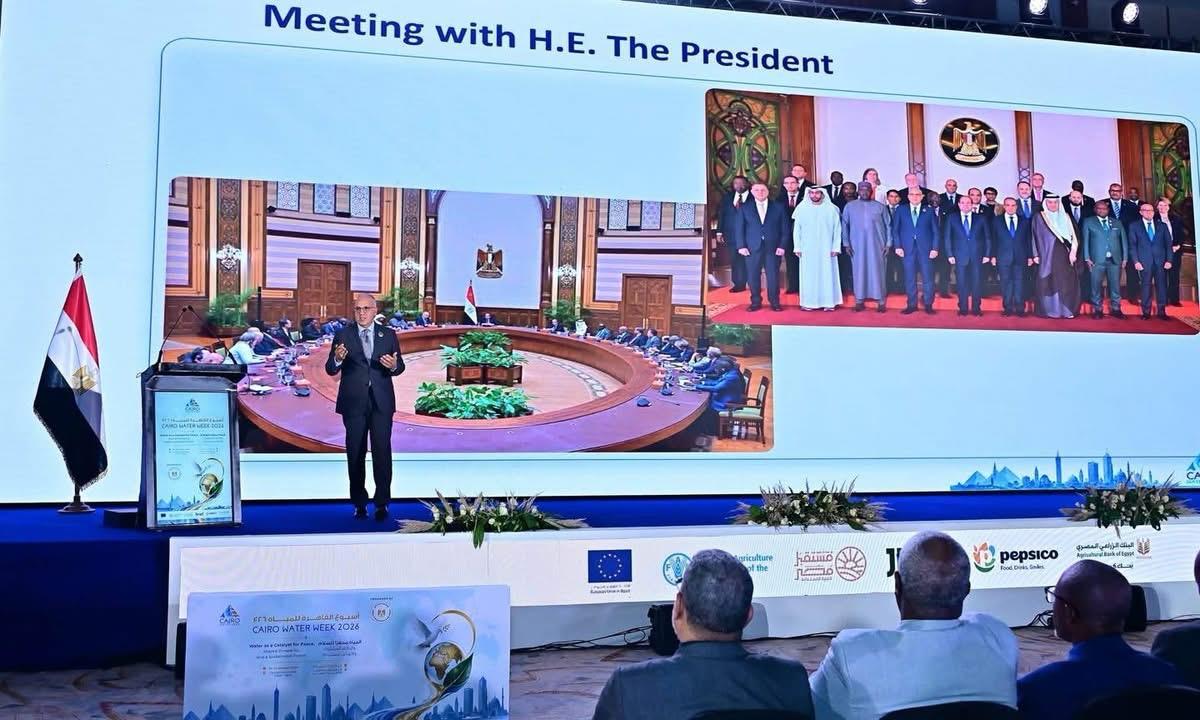
The Arab Network for Environment and Development (RAED) participated in the ninth edition of Cairo Water Week, held from 25 to 29 October 2026 under the theme “Water as a Catalyst for Peace, Shared Prosperity and a Sustainable Planet.” The event brought together policymakers, experts, researchers, international and regional institutions, and civil society organisations.
RAED General Coordinator Dr Emad Adly and Programmes Director Ghada Ahmadein represented the network in scientific sessions, high-level dialogues and capacity-building activities. Their participation brought a civil society perspective to discussions on water security, climate resilience, ecosystem protection and the integration of water and agricultural policies.
Strengthening climate resilience in water and coastal management
Adly took part in the third scientific session, “Enhancing Resilience to Climate Change through Sustainable Solutions for Water Resources and Coastal Zone Management,” where Ahmadein was a speaker.
The session featured peer-reviewed research approved by the Cairo Water Week Scientific Committee under the event’s third thematic area. It provided a forum to discuss scientific evidence and practical solutions for managing water resources and coastal areas under growing climate pressures.
Discussions covered sea-level rise, coastal erosion, land salinisation and the impacts of climate change on coastal resources and communities. Participants also addressed the need for sustainable approaches to integrated water and coastal management.
RAED’s participation reflected its commitment to linking scientific research with field experience and bringing local communities’ needs into scientific and policy discussions. Civil society organisations can help translate those needs into practical measures that can be implemented and scaled up.
Integrating nature-based solutions into the water sector
Adly also spoke at a preparatory session for the fifth Arab Land and Climate Forum titled “Nature-Based Solutions in the Water Sector: Challenges and Opportunities.”
He discussed how nature-based solutions can help address water scarcity and the growing impacts of climate change, and how healthy ecosystems can strengthen the resilience of water resources and local communities.
Adly highlighted the need for wider cooperation among governments, experts, the private sector, civil society organisations and local communities. Such cooperation can help integrate nature-based solutions into water management and climate adaptation plans and turn them into practical measures suited to local environmental and social conditions.
Protecting Egypt’s coast and adapting to climate change
Adly attended the closing workshop of the Enhancing Climate Change Adaptation in the North Coast and Nile Delta project (ECCADP), which reviewed the results of one of Egypt’s major efforts to protect coastal areas from the impacts of climate change.
Launched in 2018, the project implemented coastal protection works using nature-based solutions and environmentally friendly local materials in five coastal governorates: Beheira, Kafr El-Sheikh, Dakahlia, Damietta and Port Said.
The project developed an integrated coastal zone management plan covering approximately 1,200 kilometres of Egypt’s coastline through 2100. It also mapped the risks of coastal inundation, erosion and seawater intrusion, and supported the establishment of a national monitoring, forecasting and early warning system.
The project trained more than 500 technical personnel and supported young people and local communities in raising awareness of climate adaptation and coastal protection. These outcomes align with RAED’s work to expand the use of nature-based solutions and link ecosystem protection with the security of local communities and the sustainability of their resources and livelihoods.
Strengthening Arab coordination on water and agriculture
Adly took part in the eighth meeting of the High-Level Joint Technical Committee on Water and Agriculture, organised by the League of Arab States in cooperation with the Arab Organization for Agricultural Development.
The meeting brought together senior officials and representatives of the water and agriculture sectors from Arab countries to review progress, exchange experience and agree on priorities for closer coordination between the two sectors.
Civil society participation in these discussions is particularly important given the links between water scarcity, food security, land degradation and climate change. Addressing these challenges calls for integrated policies that reflect the needs of farmers, local communities and groups most exposed to risk.
Investing in the water–energy–food–ecosystems nexus
Adly also attended events under MED-RISE, an initiative focused on strengthening Mediterranean resilience through investment and sustainable ecosystems. The European Union organised the events in partnership with the Union for the Mediterranean, Global Water Partnership–Mediterranean and the EU-funded Water and Environment Support – Biodiversity and Climate Action (WES-BCA) project. RAED is part of the regional consortium implementing WES-BCA.
WES-BCA supported the technical preparations and facilitated several MED-RISE discussions, including an expert roundtable and an Investment Clinic. These sessions aimed to strengthen regional cooperation, put the water–energy–food–ecosystems (WEFE) nexus approach into practice and improve access to climate finance.
Participants explored how private investment and blended finance could support projects that connect these sectors through an integrated approach from source to sea. The expert roundtable and Investment Clinic also examined what makes projects bankable, how risks can be reduced, and how financial institutions, businesses, government bodies and civil society can turn proposals into projects that can be implemented and scaled up, with measurable environmental and social results.
Building African capacity in water management and food security
Adly attended the closing session of the BCLEAR training-of-trainers programme, implemented by Egypt’s Ministry of Water Resources and Irrigation in cooperation with the Center for Applied Research on the Environment and Sustainability at The American University in Cairo.
The cohort brought together 23 trainees from 21 African countries. They received training in the WEFE nexus, crop water management and knowledge transfer. Each participant is expected to train around 20 people, extending the programme’s reach to more than 450 farmers, engineers and officials. The programme aims to prepare 100 African trainers and reach approximately 2,000 beneficiaries across the continent.
Through its participation in Cairo Water Week, RAED brought civil society perspectives into policy dialogue, scientific research, investment and capacity-building discussions on water and climate. The network also underscored the importance of sharing experience among Arab and African countries and building partnerships that strengthen water and food security, protect ecosystems and help communities withstand the growing impacts of climate change.