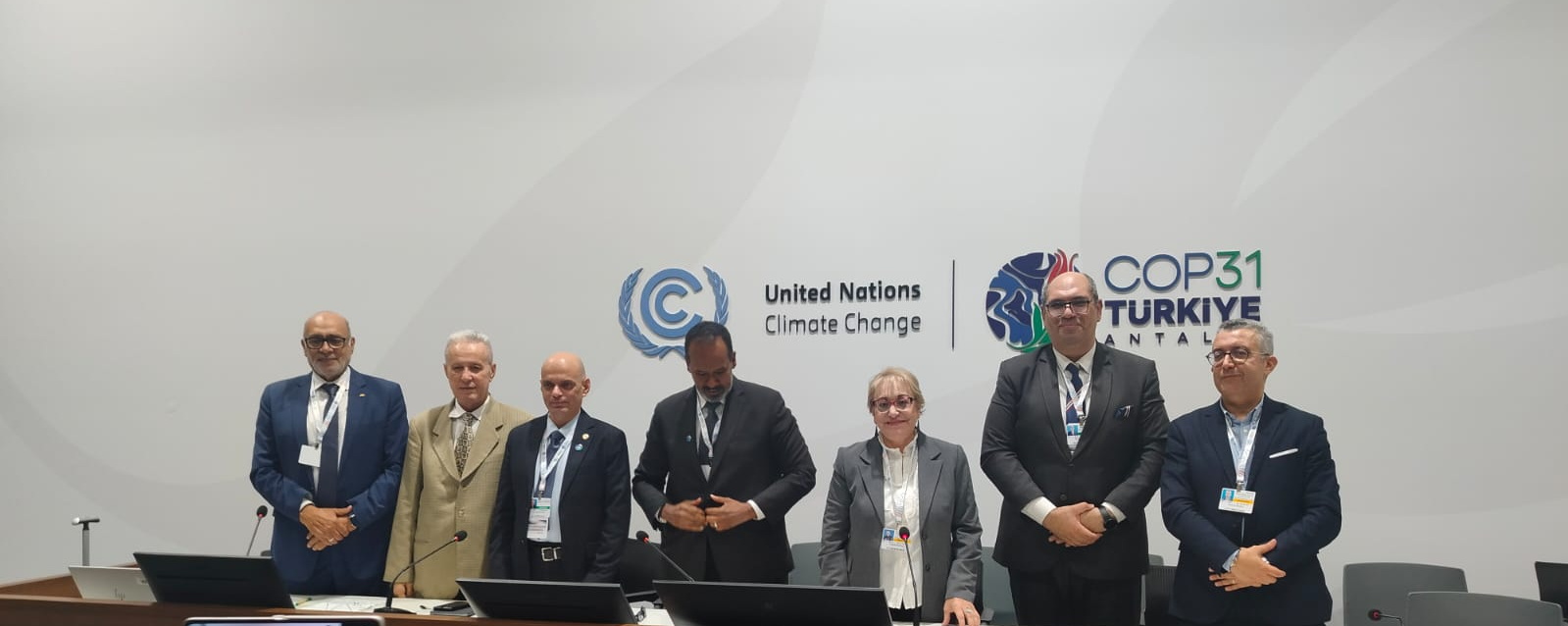
The Arab Network for Environment and Development (RAED), in cooperation with the Association for Environmental Protection and Sustainable Development in Bizerte (APEDUB), organised a panel discussion titled “Scaling Up Renewable Energy: Securing Water and Supporting Climate Action” during the 31st Conference of the Parties to the United Nations Framework Convention on Climate Change (COP31) in Antalya, Türkiye. The session examined the pivotal role of clean energy in strengthening water security, advancing sustainable development and addressing the impacts of climate change across the Arab region.
The panel brought together experts, specialists and representatives of institutions working on energy, the environment and development. Participants included Dr. Emad Adly, General Coordinator of RAED; Dr. Mahmoud Fathallah, Director of the Environment and Meteorology Department at the League of Arab States; Dr. Jawad Al-Kharraz, Adviser and Executive Director of the Mediterranean Renewable Energy Partnership; Dr. Maged Karam Mahmoud, representing the Regional Center for Renewable Energy and Energy Efficiency; Dr. Najwa Bouraoui, representing APEDUB; Eng. Malek Ghandour, representing the Amwaj Environment Association in Lebanon; and Eng. Khaled Al-Othman, representing Emaar Engineering Consultancy in Saudi Arabia.
Discussions focused on expanding renewable energy projects as a key pathway to accelerating the transition to a low-carbon economy and reducing reliance on conventional energy sources. Participants highlighted how this expansion can help curb greenhouse gas emissions and strengthen countries’ capacity to address the environmental and economic challenges associated with climate change.
The session also highlighted the close relationship between energy and water, particularly as water resources across the Arab region face mounting pressure. Water scarcity and rising demand pose challenges for agriculture, industry and urban development, making renewable energy applications in water management, desalination, pumping and treatment a promising means of improving resource efficiency and strengthening water security.
The discussion reflected growing interest in integrated solutions connecting water, energy and the environment. Such approaches can advance the Sustainable Development Goals and help build systems that are more resilient to climate change, particularly in Arab countries facing the interconnected challenges of rising temperatures, declining water resources and growing development needs.
The session emphasised the importance of strengthening regional cooperation and exchanging expertise among government institutions, civil society organisations, the private sector and research centres. This cooperation is essential to developing practical renewable energy projects, broadening their applications and securing the financing and investment needed to translate climate commitments into tangible action.
RAED’s participation reflected its commitment to strengthening regional dialogue on energy, water and climate change, supporting initiatives that expand sustainable solutions, and enhancing civil society’s role in shaping environmental and development policies to advance the green transition across the Arab region.