Jordanian Society Warns Against Tree Removal in Amman, Calls for Protecting Urban Green Cover
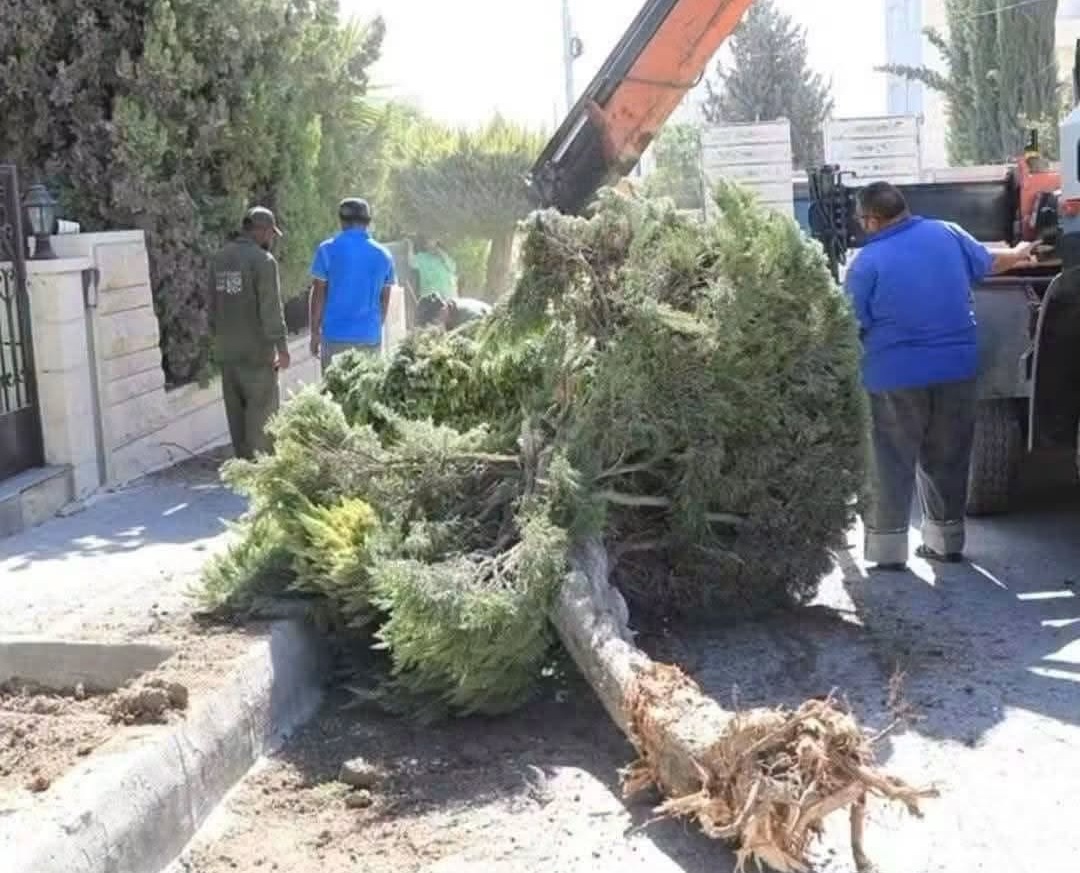
The Jordanian Society for Combating Desertification and Badia Development, a member of the Arab Network for Environment and Development (RAED) in Jordan, has warned against the expansion of tree removal from sidewalks in the capital, Amman. The Society stressed the importance of protecting urban trees and preserving green spaces, while prioritizing technical and engineering solutions that ensure pedestrian safety, with tree removal used only as a last resort.
In a statement, the Society said it was closely following an announcement by the Greater Amman Municipality (GAM) concerning the removal of some trees planted along sidewalks as part of efforts to eliminate obstacles and improve pedestrian safety and mobility.
While affirming the right of pedestrians, particularly persons with disabilities, older people and children, to safe and accessible sidewalks, the Society emphasized that challenges resulting from trees located along pedestrian routes should be addressed through carefully assessed technical and environmental solutions. Tree removal, it said, should be the final option rather than the first response.
The Society called for a case-by-case technical assessment of each tree species and individual situation before any removal decision is taken. Priority should be given to pruning and maintaining trees, modifying tree pits, or redesigning sidewalk routes wherever feasible.
It also recommended relocating trees that can be safely transplanted to suitable locations rather than uprooting and destroying them. Where removal is unavoidable for technical or public safety reasons, the Society called for replacement trees to be planted.
The Jordanian Society for Combating Desertification and Badia Development further called for the development of a clear and publicly available plan for sidewalk greening, including the selection of tree species suited to the characteristics of Amman’s streets and sidewalks. It also emphasized the need to involve agricultural and environmental specialists, as well as civil society organizations, in evaluating policies related to trees and urban green spaces.
The Society noted that the 2014 Instructions for the Construction and Maintenance of Sidewalks and Pedestrian Walkways within the Greater Amman Municipality already take the presence of trees into account in sidewalk design. The instructions define the “street furniture zone” as including tree pits alongside other street elements, demonstrating that sidewalk greening can be incorporated while maintaining safe and accessible pedestrian routes.
The Society stressed that protecting trees and expanding Amman’s green cover have become an environmental necessity amid rising temperatures and declining green spaces. Trees play an important role in improving air quality, providing shade, reducing urban temperatures, limiting the impacts of desertification and enhancing the overall urban environment.
Concluding its statement, the Society urged the Greater Amman Municipality to review any measures that could result in the unnecessary removal of trees and to work instead to preserve and expand the remaining green cover in the capital, in line with the public interest as well as environmental and urban planning considerations.