Environmental and Climate Recovery Platform Appeals to Humanity: Gaza’s Water Sector Under Bombardment
Amid the unprecedented environmental and humanitarian challenges facing the Gaza Strip, the severe deterioration of the water sector, and continued Israeli bombardment, the Arab Network for Environment and Development (RAED) participated in the first virtual seminar organized by the Environmental and Climate Recovery Platform.
The seminar was held as part of the project “Enhancing the Impact and Leadership Roles of Palestinian Youth for Resilient, Green and Just Communities,” implemented by the Ma’an Development Center.
Held on Sunday, 20 September 2026, the seminar highlighted the catastrophic condition of Gaza’s water infrastructure and sought to strengthen international and regional advocacy, promote the exchange of knowledge and expertise, and build future cooperation networks connecting Palestinian youth with international organizations and networks working on climate and environmental issues.
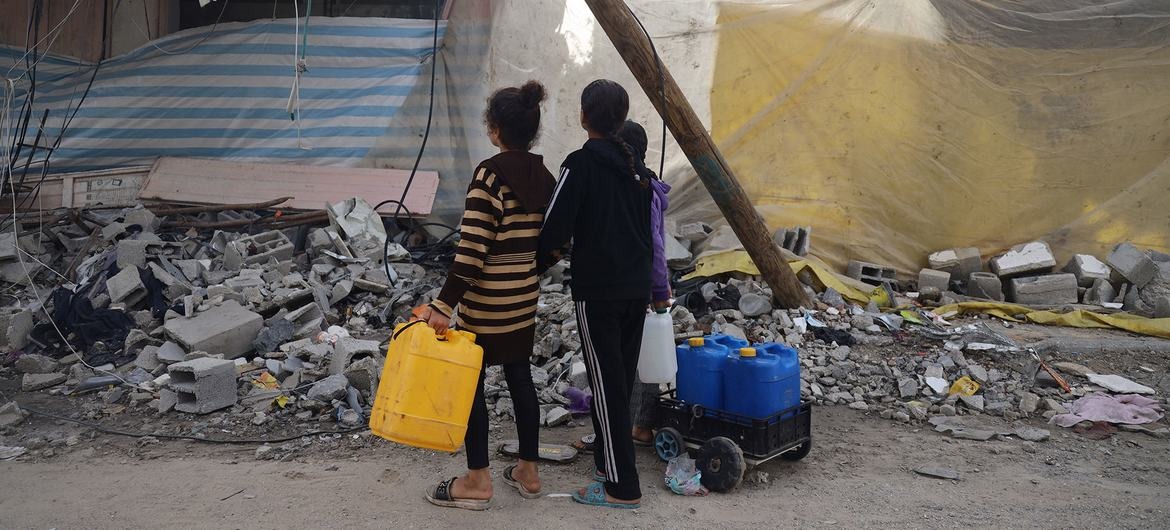
Participants reviewed the current state of water and sanitation services in Gaza, with Palestinian youth presenting the scale of extensive damage that has brought essential services close to complete paralysis. This includes the destruction of water networks and facilities, disruption of seawater desalination and wastewater treatment plants, and power outages caused by bombardment. Untreated sewage has also flowed into streets and soil, further contaminating the coastal aquifer.
Discussions also addressed the health and agricultural impacts of the continuing Israeli bombardment. Daily per-capita water availability has fallen to extremely low levels, contributing to the spread of diseases and epidemics. Agricultural land has dried out, soils have been contaminated by wastewater, crops have been damaged, and large numbers of livestock have been lost, posing a serious threat to food security for Gaza’s population.
Speaking during the seminar, Dr. Emad Adly, General Coordinator of the Arab Network for Environment and Development (RAED), said that available solutions remain limited given the unprecedented conditions in Gaza.
He highlighted the potential use of filtration and seawater desalination systems, particularly given the difficulty of applying tertiary wastewater treatment under current circumstances. He also proposed deploying small-scale, solar-powered desalination units mounted on mobile trailers, alongside expanding the distribution and use of locally manufactured water filters.
Dr. Adly further stressed the importance of using alternative resources, including foldable solar energy systems to operate water pumps and flexible water storage tanks as a safer means of storing water. He also called for wider use of hydroponic agriculture and drip irrigation technologies to reduce water losses.
The RAED General Coordinator called on the Environmental and Climate Recovery Platform to provide media materials and video footage documenting the environmental situation in Gaza for presentation at the upcoming 31st Conference of the Parties to the United Nations Framework Convention on Climate Change (COP31) in Antalya, Türkiye.
The aim, he said, is to mobilize international support and advocate for the opening of crossings and the entry of desalination equipment, fuel, and spare parts needed to restore the efficiency of Gaza’s severely damaged water system.
Responding to a question on how networking and cooperation could help address the crisis, Elham Afifi, Project Coordinator at RAED, stressed that Palestinian youth have demonstrated the creativity and innovative thinking needed to become a driving force in addressing these challenges.
She explained that young people could help connect neighborhood committees and youth initiatives with international organizations, allowing field needs to be reported and updated in a systematic and timely manner.
Afifi also highlighted the potential role of youth in managing participatory maps identifying safe water points and operational wells, establishing small working groups, and mobilizing volunteer engineers and technicians to repair networks and pumps using innovative approaches and available materials recovered from the rubble. She also emphasized the importance of health-awareness campaigns on methods for disinfecting water at household level.
The seminar concluded with participants stressing that sustaining resilience and keeping international attention focused on Gaza’s environmental reality require continued support for young Palestinian leaders and greater opportunities for them to lead the environmental and climate recovery process towards resilient, green and just communities.