Resilient and Green Communities: RAED Participates in Second Meeting of Gaza’s Climate and Environmental Recovery Platform
The Arab Network for Environment and Development (RAED) participated in the second virtual meeting of the Climate and Environmental Recovery Platform in Gaza, held on 14 October 2026 under the title “The State of Vegetation Cover and Agricultural Land in the Gaza Strip.” The meeting brought together a broad range of specialised regional and local networks and institutions.
The meeting formed part of the project “Strengthening the Influence and Leadership Roles of Palestinian Young Men and Women for Resilient, Green and Just Communities,” implemented by MA’AN Development Center in partnership with ActionAid. It aimed to highlight the ecological and agricultural catastrophe facing Gaza and explore scientific and practical approaches to environmental and climate recovery.
Discussions highlighted the severe deterioration of Gaza’s agricultural sector. According to figures presented at the meeting, military operations and systematic land clearance have damaged or bulldozed more than 87.6% of agricultural land, leaving only 3% safe, accessible and available for cultivation. Participants also examined the structural damage caused by the destruction of greenhouses and the uprooting of strategically important fruit orchards, including olive and citrus groves.
The meeting addressed the consequences of the bombardment of water wells and solar-powered irrigation networks, alongside the environmental impacts and declining agricultural productivity associated with soil contamination by heavy metals and remnants of war. Discussions also examined mechanical soil compaction caused by heavy vehicles, which has reduced soil fertility and porosity. Participants emphasised that restoring vegetation cover is essential to re-establishing ecological balance, strengthening food sovereignty and supporting the psychological and social recovery of local communities.
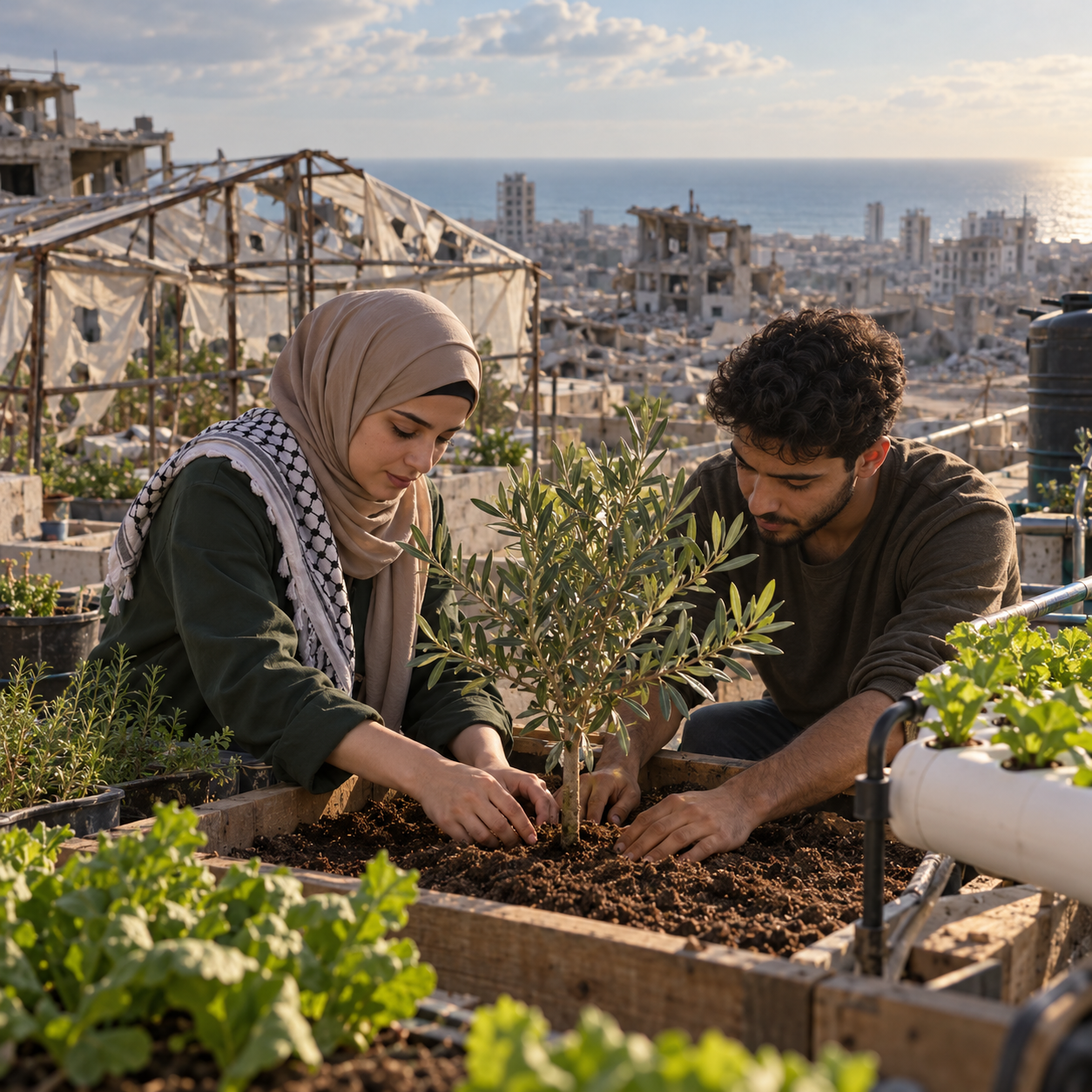
Representing RAED, Elham Afifi outlined the main obstacles to emergency recovery efforts. These include geographical restrictions resulting from military separation, embodied by the “Yellow Line”; the blockade preventing the entry of seeds, fertilisers and pipes; and the dangers posed by unexploded ordnance. She stressed the importance of adopting alternative, low-cost agricultural techniques to overcome soil contamination and water scarcity. Urban agriculture and rooftop farming, she explained, could provide a safe and rapid source of leafy vegetables away from dangerous border areas.
Afifi also highlighted opportunities to use soilless cultivation systems, including aquaponics and hydroponics, which can save up to 90% of irrigation water. Aquaponics can also support the combined production of fish and vegetables. She further advocated local recycling and organic composting to produce natural alternatives to fertilisers barred from entry.
She proposed establishing a regional fund to support environmental recovery in Gaza, mobilising international pressure to lift restrictions on essential agricultural supplies, and empowering young people as leaders of environmental and climate action.
The meeting provided an interactive space for participating institutions to exchange knowledge and experience. It underscored the role of regional networks, particularly RAED, in sharing successful experiences in clean technology, strengthening the capacities of engineers and young people through virtual training platforms, and launching youth-led environmental innovation initiatives.
The meeting concluded by affirming that environmental and climate recovery in Gaza is no longer a luxury, but an essential condition for community resilience and sustainability.