RAED Becomes an Official Consultative Partner of UNESCO in the Arab Region
Strengthening Cooperation on Water Sciences, Environmental Sustainability, and Youth Engagement Across the Arab Region
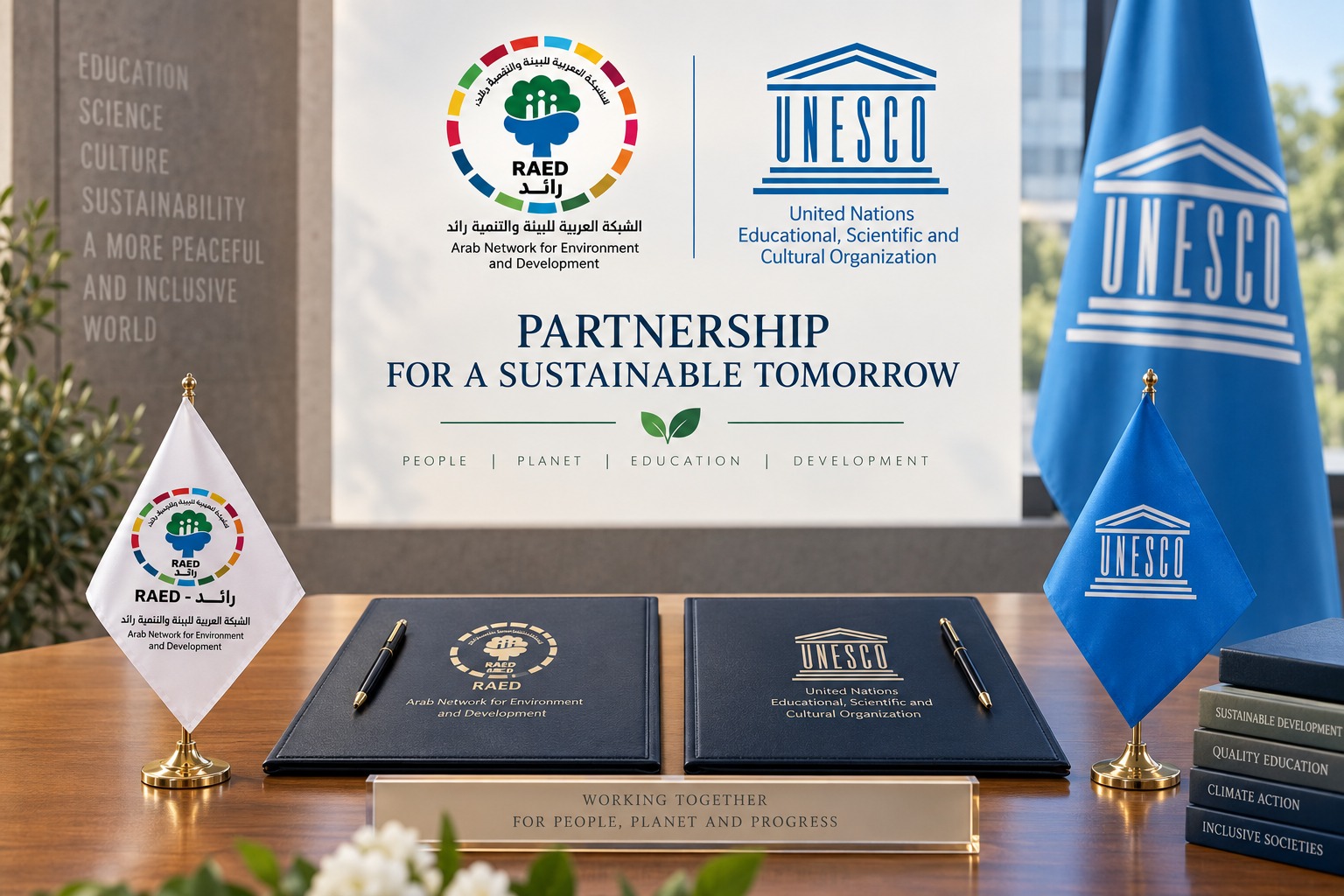
In a significant step reflecting the growing role of civil society in advancing environmental protection and sustainable development, the United Nations Educational, Scientific and Cultural Organization (UNESCO) has approved the establishment of an official partnership with the Arab Network for Environment and Development (RAED) in consultative status, following a request submitted by the Network. The decision will be brought to the attention of UNESCO’s Executive Board at its twenty-fifth session.
The decision was communicated in an official letter addressed by Khaled El-Enany, Director-General of UNESCO, to Dr. Emad El-Din Adly, General Coordinator of RAED. In the letter, the Director-General welcomed the opportunities offered by the new partnership to strengthen existing cooperation between UNESCO and the Network in several priority areas.
He emphasized that this new relationship provides an opportunity to further develop cooperation in water sciences, environmental sustainability, and youth engagement across the Arab region. He also encouraged RAED to continue expanding and deepening its collaboration with UNESCO, particularly through the Organization’s Office in Cairo.
El-Enany highlighted the potential to explore new areas of joint action directly related to the environmental and climate challenges facing the region. These include sustainable water management, climate change adaptation, and environmental education, with the aim of supporting efforts to achieve sustainable development and strengthening capacities to address mounting environmental pressures.
The new partnership holds particular significance for RAED. UNESCO’s letter affirmed that the establishment of the formal partnership reflects the Organization’s recognition of the Network as a valued partner and marks the beginning of a formal framework for dialogue and cooperation in support of UNESCO’s objectives.
The partnership provides a broader platform for strengthening cooperation between UNESCO and civil society organizations across the Arab region, particularly on issues where environmental, scientific, and development dimensions intersect. Water is among the most prominent of these areas, given that water security and sustainable water management represent major challenges to sustainable development throughout the region.
Other priority areas include adaptation to the impacts of climate change, strengthening environmental education, and expanding youth participation in efforts to build a more sustainable future.
In this context, the UNESCO Director-General confirmed that the Civil Society Partnerships Unit within the Partnerships Division will serve as the focal point for the partnership with RAED. UNESCO also expressed its continued readiness to provide the information and assistance necessary to strengthen cooperation between the two parties.
El-Enany concluded his letter by expressing UNESCO’s expectation of a productive and sustainable partnership with the Arab Network for Environment and Development, one that will create further opportunities for joint action in the coming period.
The significance of the decision extends beyond the formalization of relations between UNESCO and RAED. It also lies in the opportunities the partnership may create for developing joint initiatives and projects in the fields of environmental sustainability, sustainable water management, climate adaptation, environmental education, and youth empowerment.
The new partnership also provides a framework for strengthening the presence and contribution of Arab civil society within international processes related to the environment and sustainable development, while opening broader avenues for dialogue, knowledge exchange, and the development of initiatives that respond effectively to the environmental and climate priorities of the Arab region.