RAED Participates in Continental Meeting in Addis Ababa to Develop a Unified Position Ahead of UN Climate Conferences
African Civil Society Calls for a “Genuine Partnership” on Climate Action in Food and Agriculture Systems
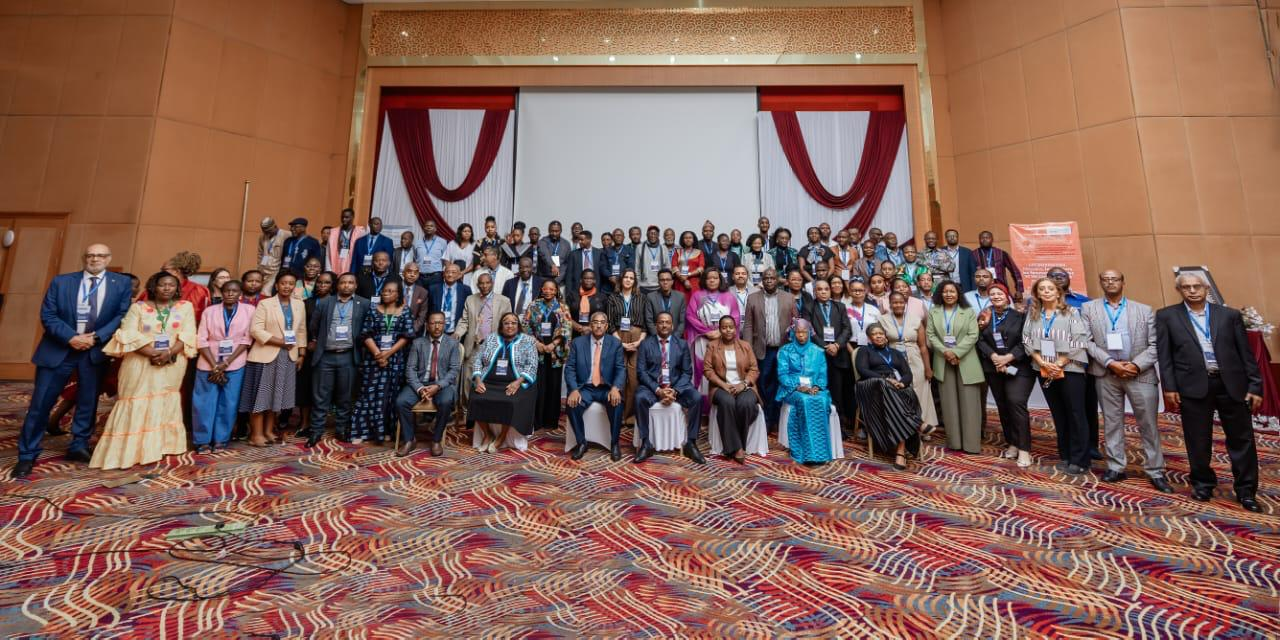
The continental meeting aimed at strengthening civil society action on climate change in food and agriculture systems concluded today in Addis Ababa, Ethiopia. Organized by the Alliance for Food Sovereignty in Africa (AFSA) from 7 to 9 September, the meeting brought together the Arab Network for Environment and Development (RAED) and a number of African civil society organizations with the objective of developing a unified African position on climate, food, and agriculture issues and advancing the continent’s priorities at upcoming global climate conferences.
The meeting was held as part of preparations for the 31st Conference of the Parties to the United Nations Framework Convention on Climate Change (COP31), scheduled to take place in Antalya, Türkiye, from 9 to 20 November 2026, as well as COP32, which is scheduled to be held in Addis Ababa, Ethiopia, next year.
RAED actively participated in discussions aimed at strengthening the role of civil society in shaping climate policies and emphasizing the importance of ensuring that the outcomes of climate conferences reflect the needs and priorities of local communities, particularly in relation to food security, adaptation to the impacts of climate change, and the sustainability of agricultural systems.
Participating African civil society organizations stressed that Africa’s climate future cannot be separated from the future of its food systems. They emphasized that climate- and food-related policies and decisions must be developed with the meaningful participation of local communities, particularly smallholder farmers, pastoralists, fishers, women, youth, and Indigenous Peoples.
The meeting called for moving beyond pledges and announced commitments toward concrete implementation, while placing climate adaptation, food security, and food sovereignty at the heart of Africa’s climate action. Participants also emphasized the importance of strengthening locally driven solutions, particularly agroecology, biodiversity conservation, the protection of local seed varieties, improved water and soil management, and support for local food markets and economies.
The organizations participating in the continental meeting identified a number of key demands to be presented at COP31 in Türkiye and COP32 in Addis Ababa. These include placing adaptation and food systems at the core of climate action implementation, ensuring accessible, grant-based climate finance with accountability at the local level, and supporting agroecology, seed sovereignty, and local food economies.
The demands also include ensuring a just transition that places people, human rights, and African development at the center of climate policies; integrating nutrition, health, gender, and pastoralism into adaptation policies; and establishing an African accountability and monitoring framework extending from Addis Ababa to local communities.
Participants stressed that the success of COP31 and COP32 should not be measured by the number of decisions and declarations adopted, but by the extent to which financing and resources actually reach local communities and strengthen their ability to cope with the impacts of climate change, improve livelihoods, and ensure access to healthy, safe, and affordable food.
At the conclusion of the meeting, African civil society organizations called on governments, African negotiators, the United Nations Framework Convention on Climate Change, climate funds, development partners, and the private sector to build a genuine partnership with civil society and local communities.
They called for a shift from ambition to implementation, from indicators to tangible results, from announced climate finance to finance that is actually accessible, and from decisions made about African communities to policies and decisions designed with them and through their meaningful participation.