Statement by RAED: Renewed Solidarity with Algeria and a Call for Urgent Regional Cooperation to Address the Impacts of Climate Change
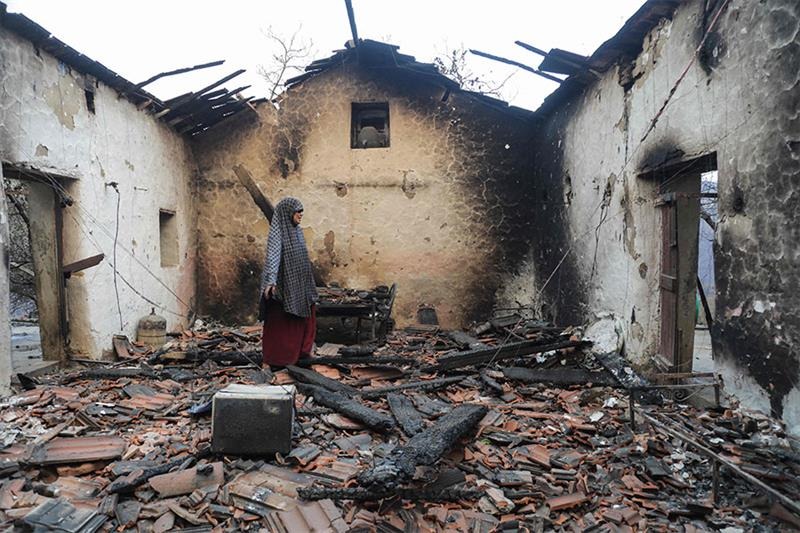
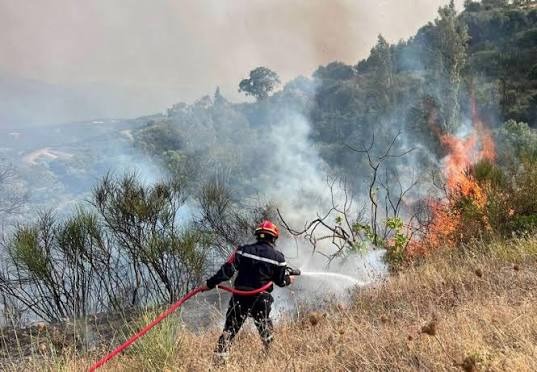
The Arab Network for Environment and Development (RAED) expresses its profound solidarity with the Government and people of the People’s Democratic Republic of Algeria following the wave of forest fires that swept through several northern regions of the country, causing severe losses, claiming lives and injuring dozens. Authorities continue their efforts to contain more than 150 fires that broke out amid an intense heatwave affecting North Africa.
RAED extends its deepest condolences to the families and loved ones of the victims and wishes a speedy recovery to those injured. The Network also expresses its appreciation for the tremendous efforts undertaken by civil protection and firefighting teams, the armed forces, volunteers, local authorities, civil society organizations, and all relevant stakeholders working to contain the fires, minimize their impacts, and protect lives and local communities.
RAED stresses that the alarming developments in Algeria are unfolding within a broader regional context marked by increasingly severe heatwaves, droughts, and forest fires. Such events can no longer be regarded as exceptional or merely seasonal phenomena; rather, they have become among the most visible manifestations of escalating climate change-related risks across North Africa and the Mediterranean region.
The Network believes that the growing scale of forest fires and their concurrence with extreme heatwaves in several countries across the region, alongside similar disasters affecting other parts of the Mediterranean, demonstrate that climate risks now transcend national borders. Addressing these risks requires a shift from isolated national responses towards an integrated framework for regional cooperation encompassing prevention, preparedness, emergency response, and recovery.
In this context, Dr. Emad Adly, General Coordinator of RAED, stated that “the recent developments in Algeria represent another warning of the escalating climate risks facing the Arab and Mediterranean regions.” He stressed that protecting lives, forests, and natural resources requires stronger cooperation among Arab countries, the development of regional mechanisms for early warning and rapid response, and enhanced exchange of information, expertise, and technologies, alongside increased investment in prevention, forest management, and the restoration of degraded ecosystems.
Dr. Adly called for forest fires to be placed among the priorities of climate action and for regional cooperation on disaster risk management to be strengthened. This should include the development of shared databases on forest fires and climate risks, the exchange of expertise and successful practices, and capacity-building for civil protection agencies and local communities, with particular emphasis on nature-based solutions and the sustainable management of forests and land resources.
For her part, Dr. Fatma Zohra Zerouati, RAED National Coordinator in Algeria, emphasized that the human and environmental losses resulting from the recent fires underscore the urgent need to intensify national and regional efforts in both prevention and response. She noted that tackling forest fires can no longer be regarded as the responsibility of any single country, but instead requires cross-border solidarity and cooperation, particularly given the increasingly similar climate risks confronting countries across North Africa.
RAED’s National Coordinator in Algeria also stressed the importance of strengthening the exchange of information and technical expertise, developing early-warning systems and mechanisms for cooperation during emergencies, and supporting local communities in enhancing their capacity to adapt to heatwaves, droughts, and forest fires. Such measures are essential to reducing human losses and protecting vegetation cover, biodiversity, and natural resources.
RAED further emphasizes that reducing the risks associated with forest fires cannot be separated from addressing the broader causes of the climate crisis. This requires accelerating the transition towards clean energy systems, reducing greenhouse gas emissions, strengthening climate adaptation policies, and protecting and restoring ecosystems as fundamental pillars for building resilience to heatwaves, droughts, and extreme climate events.
The Network renews its call for a more effective Arab-Mediterranean partnership to address climate risks and environmental disasters—one founded on solidarity, the exchange of expertise and resources, and the strengthening of national and regional capacities. RAED affirms its readiness to continue working with governments, regional and international organizations, and civil society organizations to support initiatives aimed at protecting forests and natural resources, enhancing community preparedness, and building greater adaptive capacity and resilience to the impacts of climate change.
Once again, RAED expresses its full solidarity with the Government and people of Algeria in confronting this disaster and extends its deepest condolences to the families of the victims. The Network wishes safety to all citizens and to those engaged in firefighting and rescue operations, stressing that regional cooperation is no longer an option, but a necessity for confronting escalating climate risks and protecting both people and nature across the Arab and Mediterranean regions.