RAED Launches RESCOM Project to Strengthen Mediterranean Ecosystem Resilience, with Lake Burullus a Priority for Action in Egypt
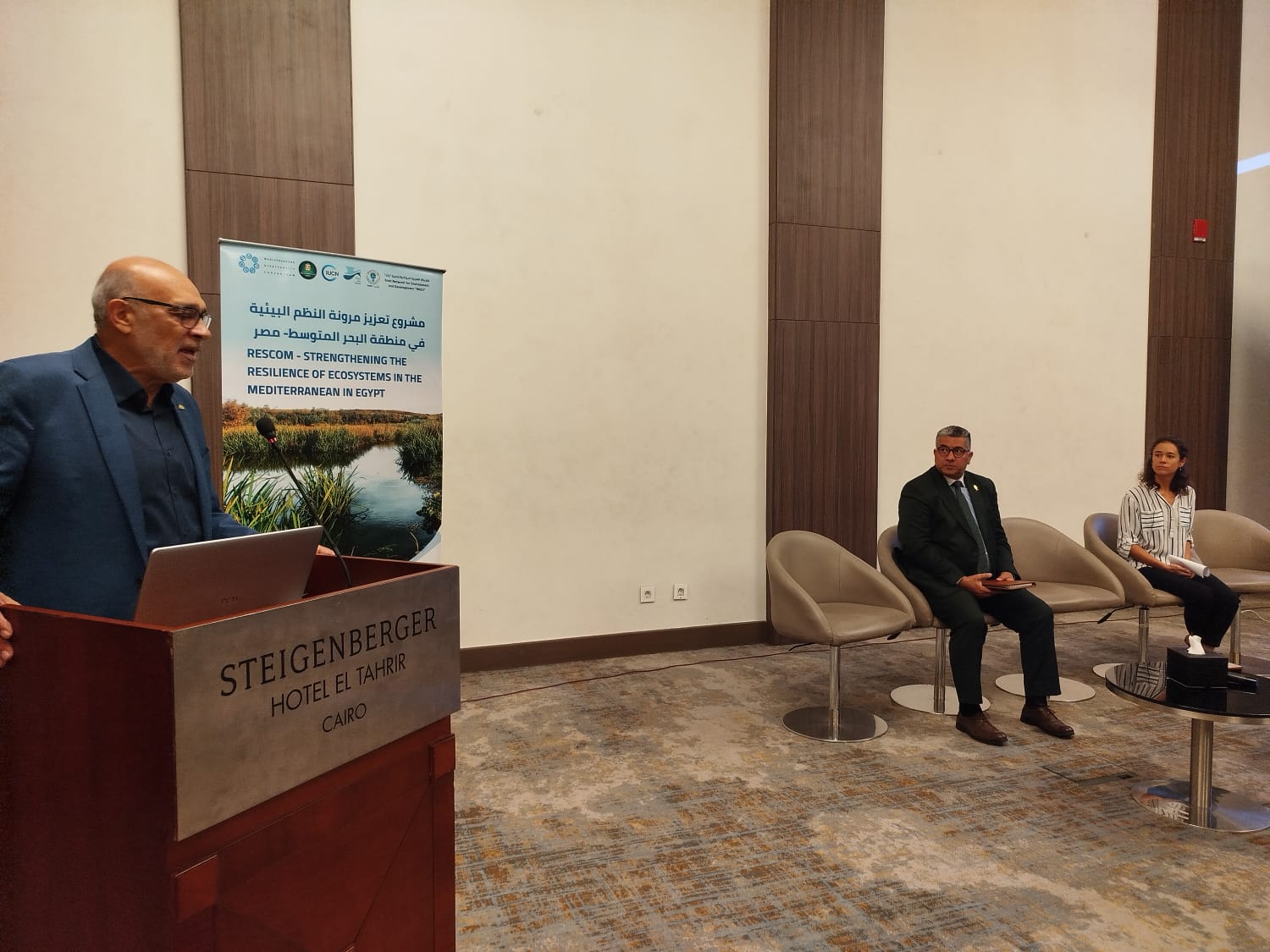
The Arab Network for Environment and Development (RAED) launches the RESCOM project today, Tuesday, 20 October 2026, marking a new step towards strengthening the role of Arab civil society in environmental protection and addressing the impacts of climate change. The project aims to enhance ecosystem resilience across the Mediterranean through nature-based solutions that conserve biodiversity, restore natural habitats and improve ecosystem quality, supporting the sustainability of natural resources and local livelihoods.
As the first major project of the Consortium for Mediterranean Biodiversity (CMB), RESCOM forms part of a regional effort to strengthen ecological connectivity between natural habitats and develop integrated approaches to ecosystem conservation and restoration, involving relevant stakeholders, natural area management authorities and their local partners.
The project is being implemented at multiple sites across eight Mediterranean countries: Albania, Egypt, Italy, Libya, Morocco, Montenegro, Tunisia and Türkiye. It seeks to support nature conservation and restore ecological connectivity between habitats, enabling species movement and maintaining essential natural processes, particularly water and nutrient cycles.
Lake Burullus: An Environmental Priority in Egypt
Lake Burullus, in Kafr El-Sheikh Governorate in the northern Nile Delta, is a key site for the project’s interventions in Egypt. As the country’s second-largest coastal lake and one of its most important wetlands, it supports rich biodiversity and provides natural and economic resources for large segments of the local population.
The target area covers approximately 46,200 hectares and encompasses diverse habitats, including the brackish lake, reedbeds, marshes, islands and sand dunes, alongside agricultural land and aquaculture operations. Managed by Egypt’s Ministry of Environment, the area has been nationally protected since 1998. It is also designated as a Wetland of International Importance under the Ramsar Convention, an Important Bird Area and a Key Biodiversity Area.
The lake performs multiple ecological functions. It provides habitat for migratory and resident birds, helps protect the coastline, improves water quality and contributes to groundwater regulation. It also supports fishing, agriculture and aquaculture, which provide important sources of income and employment for local communities.
However, this ecosystem faces growing pressures, including pollution from untreated domestic wastewater, agricultural waste and aquaculture activities; deteriorating water quality and heavy metal contamination; illegal fishing and overexploitation of fish stocks; and wetland loss driven by urban and agricultural expansion. These pressures are compounded by climate change, coastal erosion, sea-level rise, poor water circulation and sediment accumulation.
Nature-Based Solutions to Restore Ecological Balance
RESCOM aims to improve the environmental quality of Lake Burullus by developing a strategic management plan and strengthening its resilience to climate pressures and human activities. Its nature-based solutions combine pollution reduction at source, restoration of wetland functions, biodiversity protection and support for sustainable livelihoods among communities dependent on fishing and agriculture.
Priority interventions include improving water quality and circulation, restoring degraded habitats, encouraging sustainable agricultural practices and more environmentally compatible aquaculture methods, strengthening fisheries management and combating illegal fishing. The project will also support alternative sources of income to ease pressure on natural resources.
The project adopts a multi-ecosystem approach, recognising the lake as an interconnected social and ecological system encompassing wetlands, reedbeds, coastal waters, agricultural land, fish farms and local communities. Interventions therefore extend beyond problems within the lake itself to address sources of pollution and pressures across its wider ecological landscape.
Proposed solutions include establishing constructed wetlands within rice fields to treat water, using floating reed belts in aquaculture ponds, selectively managing reeds and improving water circulation. These measures complement natural habitat restoration, species protection and sustainable fisheries management.
A Multi-Stakeholder Partnership for Sustainability
Implemented in coordination with the Nature Conservation Sector of the Egyptian Environmental Affairs Agency, the project’s success depends on stronger coordination among ministries, government bodies, research institutions, civil society organisations, fishers, farmers and local authorities. This collaboration is intended to ensure stakeholder participation in setting priorities, implementing interventions and evaluating results.
The project also places emphasis on capacity building, adaptive management and updating management plans for the Lake Burullus ecosystem, strengthening decision-making and sustaining conservation and restoration efforts over the long term.
The interventions are expected to improve water quality, reduce pollutant and nutrient inflows, restore natural habitats, and enhance biodiversity and ecosystem resilience. They are also expected to support sustainable fisheries management and diversify local income sources, reducing pressure on natural resources.
The launch of RESCOM offers an opportunity to integrate environmental protection with improvements in the economic and social conditions of local communities, recognising that ecosystem conservation is inseparable from the sustainability of the resources on which these communities depend in their daily lives.
Through its participation in the project, RAED continues to support regional environmental action and advance nature-based solutions as a practical approach to climate adaptation and ecosystem restoration, helping safeguard the Mediterranean’s natural resources and support sustainable development.