At COP31, RAED Calls for Local Knowledge and Smart Water Management to Build Drought Resilience
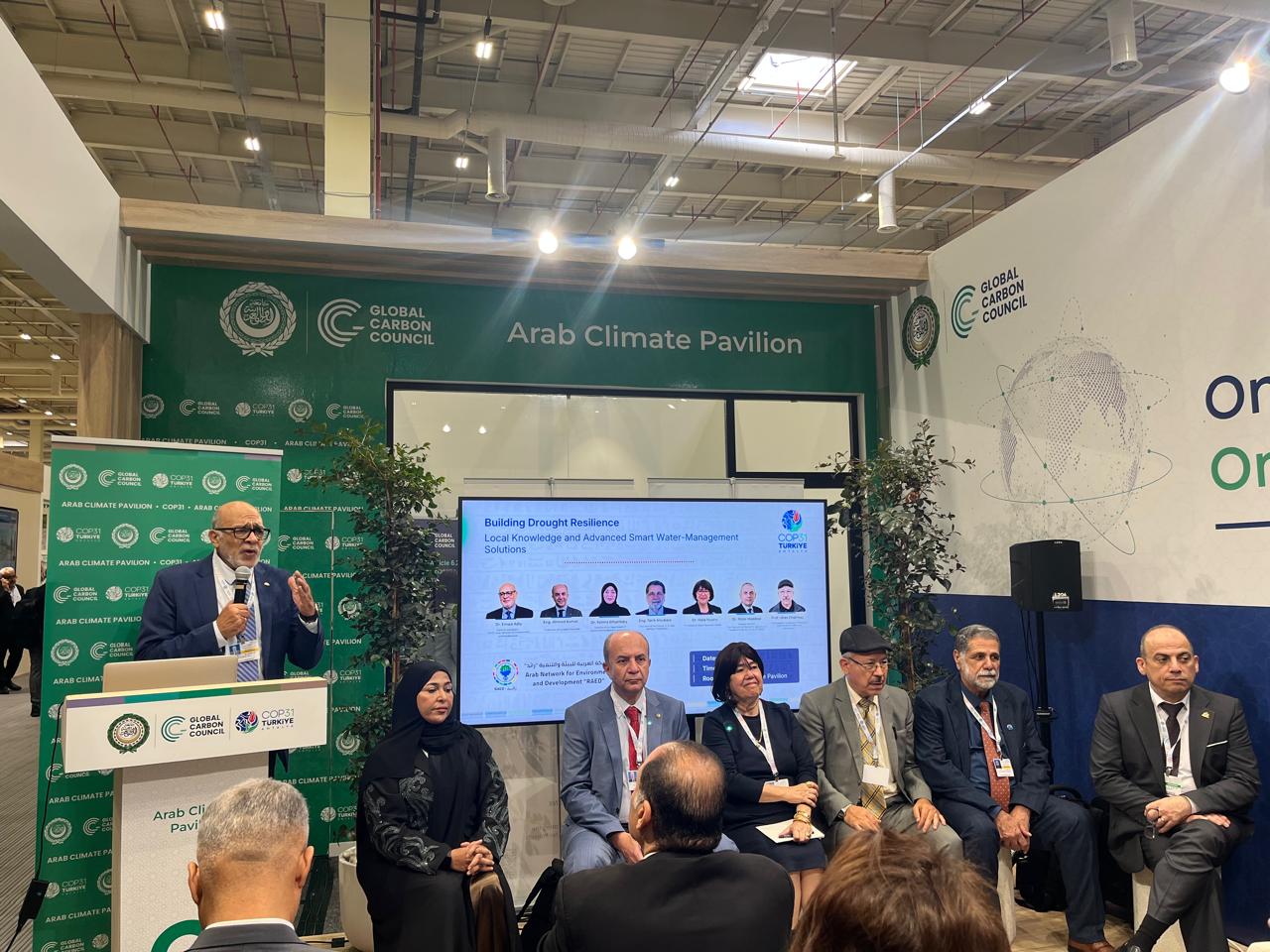
The Arab Network for Environment and Development (RAED) held a session on 18 November during the 31st Conference of the Parties to the United Nations Framework Convention on Climate Change (COP31) in Antalya, Türkiye, exploring how local knowledge and smart water management solutions can strengthen drought resilience, support climate adaptation and safeguard livelihoods in the most affected communities.
Held at the Arab Climate Pavilion, the session addressed growing drought risks across the Arab region, driven by rising temperatures, increasing pressure on water resources, and declining and increasingly erratic rainfall. These pressures have direct consequences for agriculture, food security and local livelihoods, particularly in rural areas and communities that depend heavily on limited water resources.
Discussions stressed the need to move beyond conventional approaches that treat drought as an emergency requiring additional water supplies or measures to address its impacts after they occur. Participants called for proactive, integrated drought risk management grounded in an understanding of local risks, stronger stakeholder participation, inherited community knowledge and experience, and the use of data and smart tools to inform decisions and improve water-use efficiency.
The session highlighted the pivotal role of civil society organisations, research institutions and local communities in strengthening cooperation among stakeholders and translating local knowledge into practical inputs for planning and decision-making. Such cooperation can enhance communities’ capacity to adapt to drought while supporting sustainable and equitable water management.
The discussions drew on practical experience and lessons from RAED’s drought resilience and water management activities under the ABCDryBASIN project, “Activating Stakeholder Participation to Enhance Drought Resilience through Traditional Knowledge and Smart Water Resources Management.” The project aims to empower stakeholders, draw on local knowledge, deploy smart tools and support equitable and sustainable water governance.
The project offers a practical, adaptable framework whose experience can inform efforts in other Arab areas facing similar environmental and climate challenges, encouraging knowledge exchange and the wider adoption of successful practices.
The session explored ways to shift from responding to drought impacts towards early preparedness and risk management. Discussions also addressed strengthening the preparedness and response capacities of local communities and relevant institutions, alongside the importance of data and information in guiding decisions before drought impacts intensify.
A further focus was documenting the accumulated knowledge and experience of local communities and farmers, integrating it with modern scientific knowledge, and translating local experience into solutions and practices that can be replicated and scaled up. Discussions emphasised involving stakeholders in the design and implementation of drought management solutions and connecting technological tools with local knowledge to ensure that they suit local conditions and can be sustained over time.
These efforts are expected to facilitate the exchange of experience and lessons in proactive drought risk management, demonstrate the value of local knowledge in developing adaptation solutions, and raise awareness of smart tools for water and drought management. They also aim to strengthen dialogue among civil society, governments, research institutions and the private sector, while identifying opportunities for cooperation and the transfer and scaling up of successful solutions and practices.
The session also highlighted interest in strengthening cooperation with relevant regional and international institutions, including the Food and Agriculture Organization of the United Nations (FAO), the League of Arab States, the Arab Center for the Studies of Arid Zones and Dry Lands (ACSAD), the Union for the Mediterranean, and the International Union for Conservation of Nature (IUCN), to support regional coordination on climate, water and sustainable development.