“Resilience Starts at Home”: World Marks International Day for Disaster Risk Reduction 2026
RAED stresses the importance of raising community awareness, ensuring safe and resilient housing, and embedding a culture of preparedness
Observed annually on 13 October, the International Day for Disaster Risk Reduction renews global attention to efforts to reduce disaster risks and strengthen communities’ ability to withstand disasters and recover from their impacts. In 2026, the day carries the theme “Resilience Starts at Home,” underscoring that protecting lives and property begins where people live, and that building safer communities requires making preparedness an everyday practice shared by individuals and institutions.
The Arab Network for Environment and Development (RAED) is committed to marking this annual international observance as part of its work on environmental protection and sustainable development. Its participation reflects its commitment to raising public awareness of environmental and climate risks, strengthening the role of civil society organisations in sharing knowledge, and encouraging initiatives that protect people, resources and local communities from the consequences of disasters.
In a statement marking the occasion, RAED emphasises that this year’s theme highlights the central role of the home as more than a place to live: it is a foundation of safety and family stability. Yet unsafe construction, urban planning that fails to account for disaster risks, or inadequate maintenance can turn homes into sources of vulnerability, increasing the likelihood of human and economic losses when disasters strike.
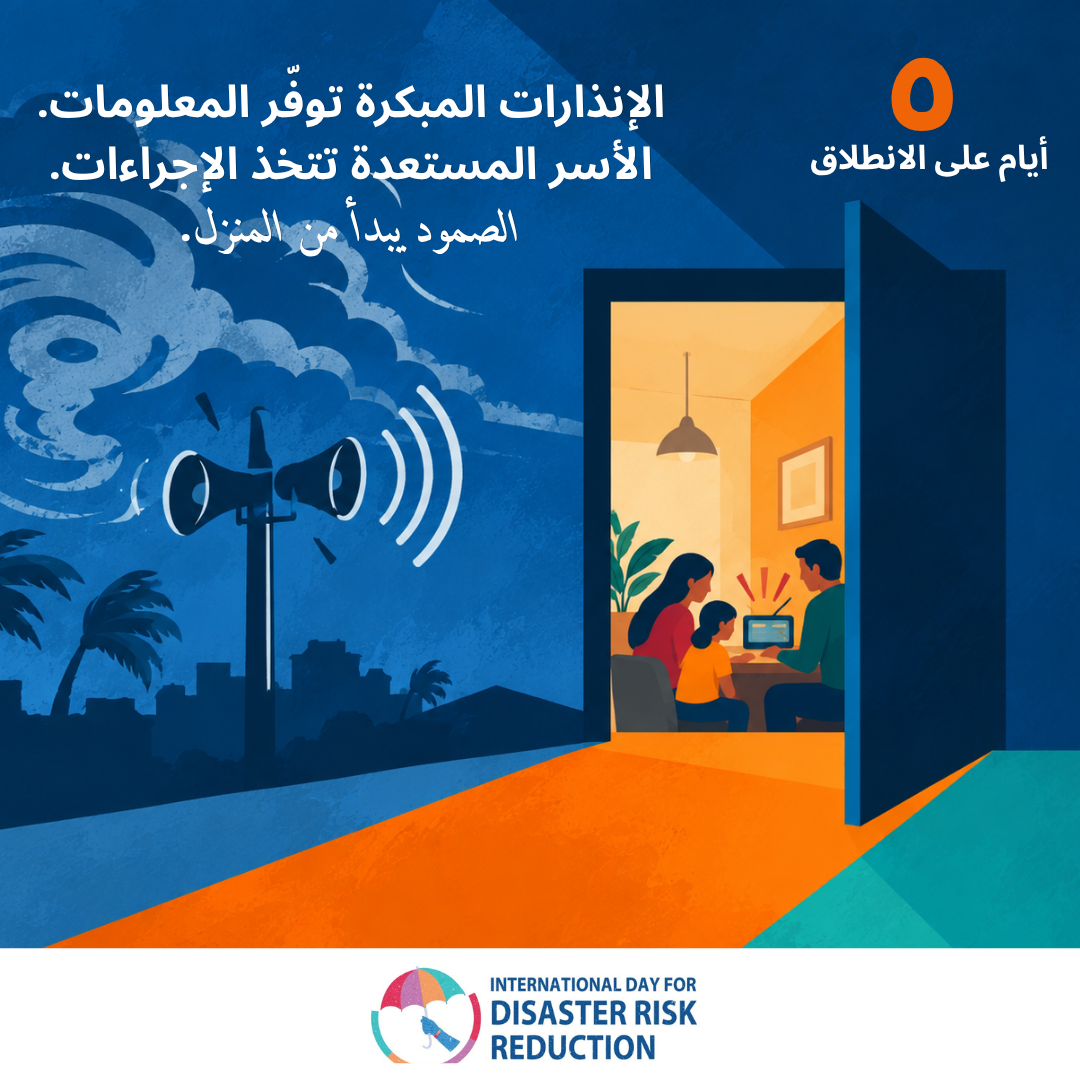
RAED stresses that resilience cannot be achieved solely through responding to disasters after they occur. It begins with preventive measures, including selecting suitable building sites, applying construction standards that address disaster risks, providing adequate and affordable housing, strengthening early warning systems, and making information available to help families understand the risks around them and prepare to respond. These efforts are increasingly important as climate change intensifies the threats posed by flooding, extreme weather and other hazards that can undermine housing safety, community stability and livelihoods.
The theme of the International Day for Disaster Risk Reduction 2026 rests on a fundamental principle: reducing risk is a shared responsibility among governments, the private sector, households and local communities. Governments are called upon to improve urban planning policies, enforce safe building requirements, invest in resilient infrastructure, and ensure that risk information reaches everyone. The private sector—including construction companies, property developers, financial institutions and insurers—also has an important role in improving housing safety, complying with appropriate engineering standards, and developing affordable financing and insurance solutions that help families reduce their exposure to risk.
At the household level, preparedness begins with learning about local risks through reliable sources, understanding warnings issued by the relevant authorities, developing a family emergency plan, agreeing on how to communicate and act when necessary, and keeping essential emergency supplies. It also involves participating in awareness activities and community initiatives focused on disaster preparedness.
The observance further stresses the need to address the needs of women, children, older people, persons with disabilities and low-income households, ensuring that they receive the information, protection and support they require. This approach strengthens the inclusiveness of preparedness plans and ensures that those most exposed to risk are not left without adequate protection.
This year’s observance highlights the role RAED can play, in cooperation with its members and partners across the Arab region, in raising awareness of disaster risks, encouraging preventive practices, and connecting environmental and climate concerns with community safety and people’s everyday needs. Media platforms and civil society networks are essential to making risk information easier to understand, sharing awareness messages that help families make informed decisions, and highlighting successful local experiences and initiatives in safe housing and emergency preparedness. They can also encourage the exchange of expertise among institutions and relevant stakeholders across Arab countries.
Stronger partnerships among governments, civil society organisations and the private sector offer an important pathway towards sustainable solutions that respond to local risks. Such partnerships can support community participation in planning and decision-making while drawing on residents’ accumulated knowledge and experience, particularly those of women, young people and community leaders. These approaches align with the Sendai Framework for Disaster Risk Reduction 2015–2030, which emphasises prevention and preparedness, a better understanding of risk, stronger governance, investment in risk reduction measures, and greater community resilience.
RAED affirms that marking the International Day for Disaster Risk Reduction goes beyond drawing attention to challenges. It aims to encourage individuals and institutions to take practical, achievable steps that begin at home and extend to the neighbourhood, the city and society as a whole.
The central message of the 2026 observance remains clear: investing in prevention and preparedness costs less than dealing with losses and rebuilding after disasters. Safe housing is a fundamental right, and resilience is a necessity for protecting lives, safeguarding livelihoods and achieving sustainable development.