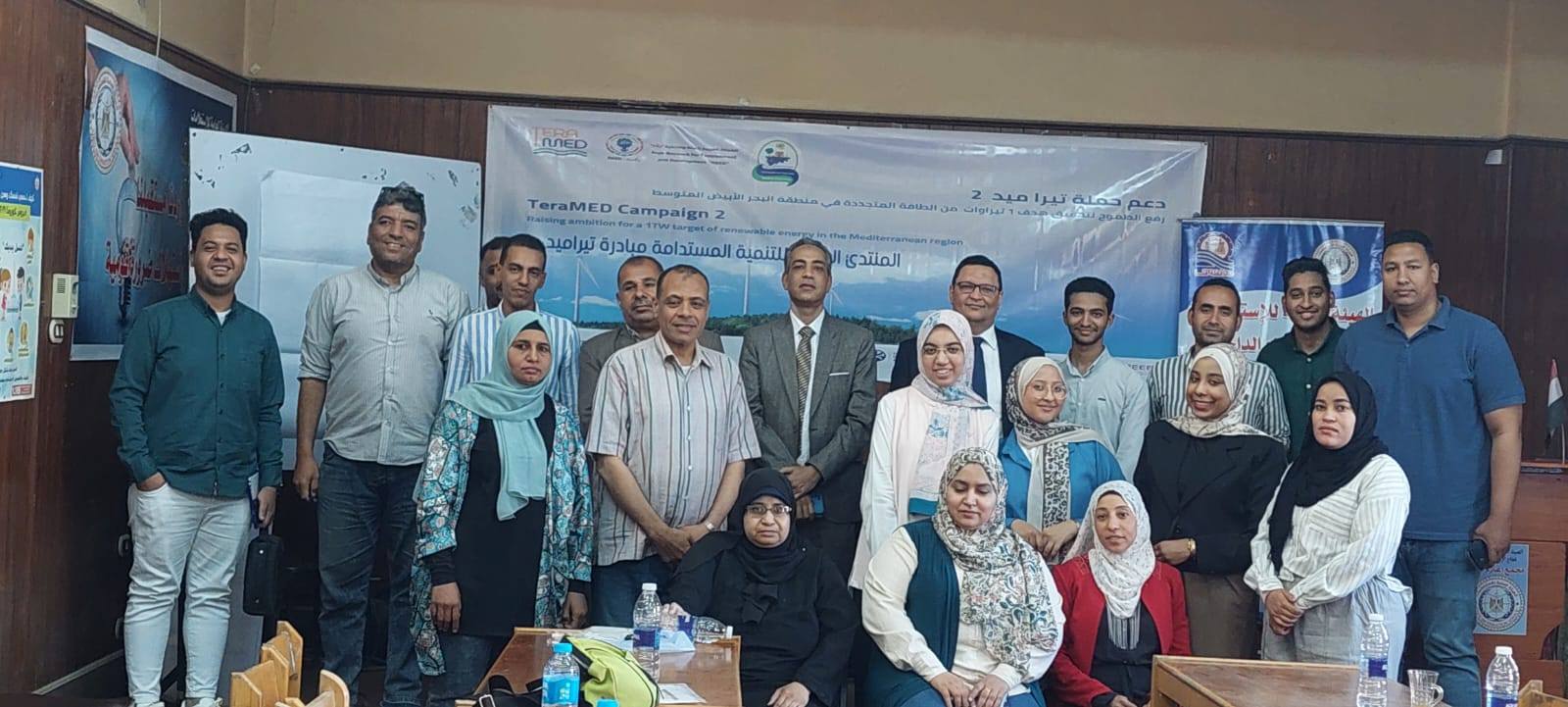
In Partnership with RAED and the Egyptian Sustainable Development Forum: Qena Media Complex Discusses Support for the TeraMed Initiative
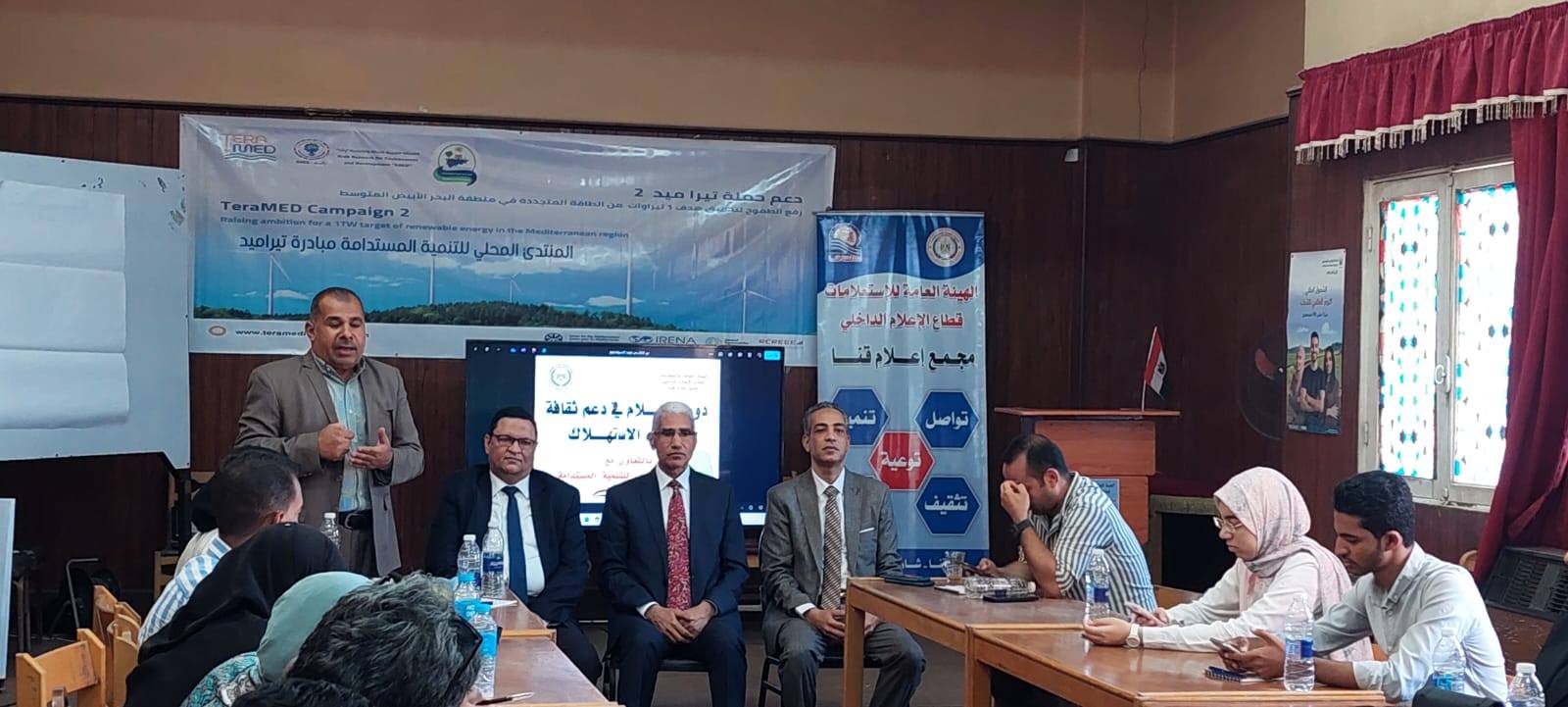
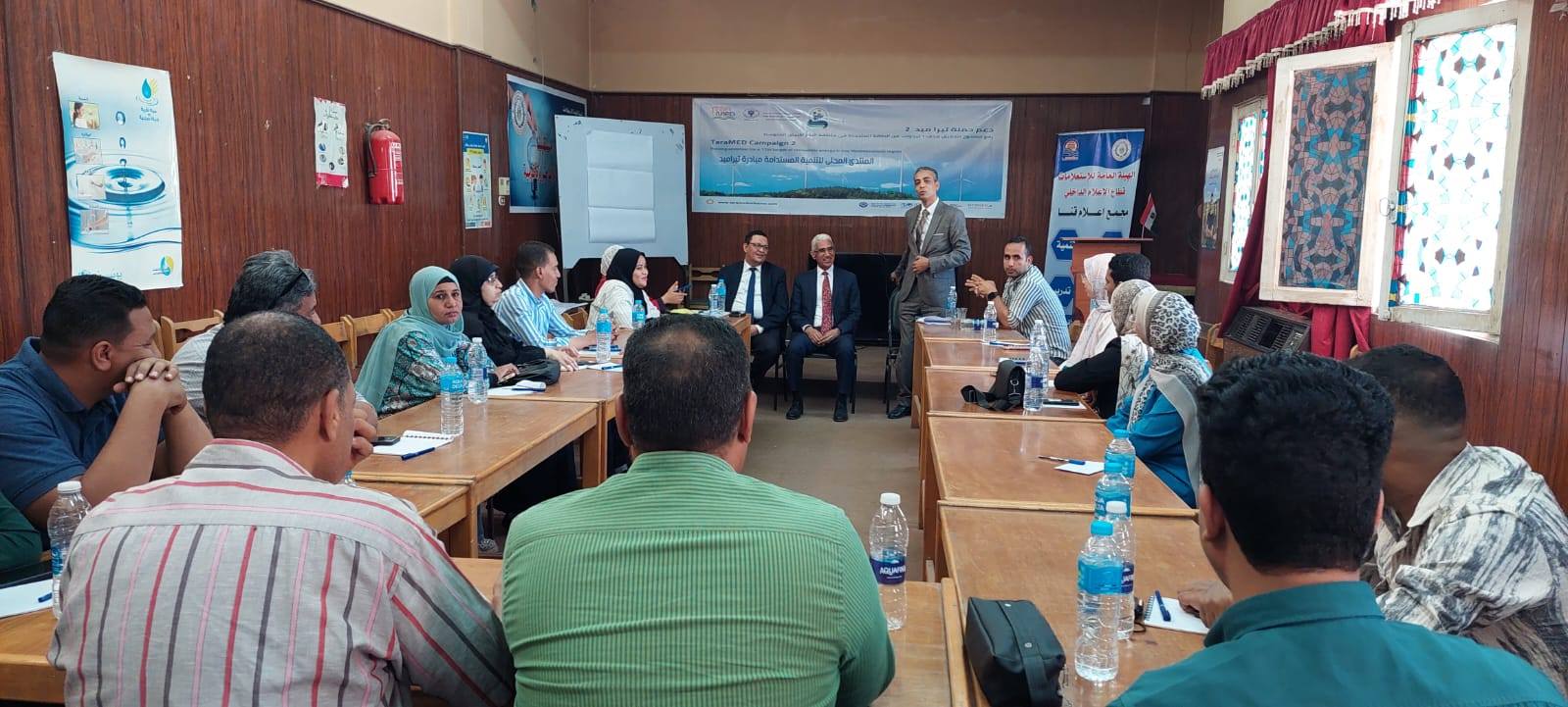
Within the framework of the strategic partnership between the Arab Network for Environment and Development (RAED) and the Egyptian Sustainable Development Forum (ESDF), and as part of the activities of the TeraMed Initiative aimed at supporting the transition towards sustainable energy, Qena Media Complex, in cooperation with the Local Sustainable Development Forum in Qena, organized a discussion session on “The Role of Media in Promoting a Culture of Rational Consumption.” The session addressed mechanisms for enhancing energy efficiency and expanding the use of renewable energy sources at the local level.
The meeting was held as part of the activities of the Local Sustainable Development Forums in support of the objectives of the TeraMed Initiative, which is being implemented across the Mediterranean Basin. RAED coordinates the efforts of civil society organizations in the Arab countries of the southern and eastern Mediterranean to raise awareness of this regional initiative, which aims to increase renewable energy production capacities in the countries of the region to one terawatt by 2030.
The session, held under the patronage of Ambassador Alaa Youssef, Chairman of the State Information Service, and under the supervision of Major General Dr. Tamer Shams El-Din, Head of the Internal Media Sector at the State Information Service, aimed to raise awareness among media professionals, journalists, and students of the Faculty of Mass Communication at South Valley University about the state’s efforts to rationalize consumption and the mechanisms for strengthening efforts to promote a culture of renewable energy.
The meeting brought together a number of experts and media professionals, including Dr. Abbas Mansour, former President of South Valley University; Youssef Ragab, Director of Qena Media Complex; Yasser Abdel Mawgoud, Vice President of the Regional Federation of NGOs and Coordinator of the Local Sustainable Development Forum in Qena; Ahmed Al-Afyouni, Head of the Trade Union Committee in Qena; Bassam Abdel Hamid, Media Advisor to the Governor of Qena; and Dr. Ahmed Khairy, Lecturer of Electronic Media at the Faculty of Mass Communication and Communication Technology, who delivered the main lecture.
At the beginning of the session, the Coordinator of the Local Sustainable Development Forum introduced the TeraMed Initiative, explaining that it seeks to emphasize the importance of relying on renewable energy and increasing clean energy production capacities in the Mediterranean region to one terawatt by 2030. Meanwhile, the former President of South Valley University reviewed the state’s efforts in the field of energy consumption rationalization and the shift towards the use of renewable resources, describing this as both a “national duty” and a “collective responsibility” shared by every member of society. He stressed that media professionals have a responsibility to warn against improper and excessive consumption, which wastes energy resources and threatens the future of coming generations.
Dr. Mansour added that, during his tenure as President of the University, he was keen to place energy consumption rationalization at the top of his priorities, considering it an integral part of the culture of university work. This was pursued through clear plans to rationalize spending and redistribute resources. He called on participants to adopt national initiatives such as “Save It, Light It,” which aims to instill awareness among students and staff about the importance of the rational use of energy.
In his lecture, Dr. Khairy addressed the role of media in promoting a culture of rational consumption, encouraging interest in renewable energy, and producing diverse journalistic stories on climate issues and support for the green economy. He also stressed the need for media outlets to highlight positive environmentally friendly models. He underlined the importance of digital media, which is no longer merely a means of transmitting news due to its rapid ability to reach all segments of society, but has become an effective tool for shaping public awareness and influencing behavior.
The Lecturer of Electronic Media emphasized the need for media institutions to adopt climate and environmental issues as global priorities of concern to the entire world. He noted that rationalizing consumption is a “national and ethical responsibility” that contributes to preserving natural resources and supporting sustainable development efforts. He further stated that rational consumption is not merely a call to reduce use or give up necessities, but rather a “civilized awareness” that reflects people’s respect for their country’s resources and the rights of future generations.