Water and Environment Support Project Launches Assessment of Extended Producer Responsibility for Plastic Products in Morocco
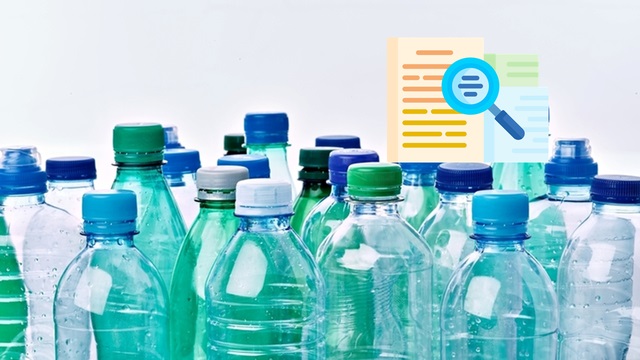
The Water and Environment Support – Biodiversity and Climate Action Project held an online introductory meeting to discuss the financial impact assessment program for the proposed implementation of an Extended Producer Responsibility (EPR) model for plastic bottles made from polyethylene terephthalate (PET) in the Kingdom of Morocco.
The meeting was held as part of efforts to support Morocco in establishing an effective and sustainable Extended Producer Responsibility system. The proposed system is intended to improve plastic-waste management, advance the principles of the circular economy, and facilitate the transition towards more sustainable production and consumption patterns aligned with regional and international environmental and climate priorities.
The environmental activity, launched in Morocco in cooperation with the Ministry of Energy Transition and Sustainable Development, aims to develop an integrated operational, institutional, and financial model for implementing an EPR system for PET bottles. The model seeks to ensure sustainable financing and effective implementation mechanisms while maintaining a balance between economic efficiency and environmental effectiveness, in line with the principles of the green and circular economies.
This initiative forms part of a broader vision to support environmental policies in partner countries by improving resource management, reducing plastic pollution, and strengthening recycling systems. These efforts are expected to contribute to the protection of marine and terrestrial ecosystems, particularly in the Mediterranean region, which faces growing challenges associated with the accumulation of plastic waste and the degradation of biodiversity.
During the meeting, the project’s environmental experts presented the activity’s detailed work plan, including the stages of the financial impact assessment, the analysis of regulatory and economic options, and an examination of the potential roles of the public and private sectors in implementing the EPR system.
The meeting also featured an extensive discussion with a group of key stakeholders. Participants exchanged views on the practical implementation mechanisms for the proposed model and the potential challenges associated with its application, including the availability of adequate waste-management infrastructure and the legislative and regulatory frameworks required to ensure the system’s effectiveness and long-term sustainability.
Participants emphasized the importance of establishing an integrated system with clearly defined roles and responsibilities for all relevant stakeholders, including producers, regulatory authorities, and waste collection and recycling operators. They also stressed the need to introduce appropriate economic and legislative incentives to encourage compliance with the new system and ensure its continuity.
The activity in Morocco is being implemented within the broader framework of the Water and Environment Support – Biodiversity and Climate Action Project, which seeks to strengthen environmental protection, restore biodiversity, improve the management of scarce water resources, and enhance climate-change adaptation capacities across the Mediterranean region. The project also supports the development of environmental policies in partner countries and relevant regional frameworks, particularly the Union for the Mediterranean and the Barcelona Convention.
The project is being implemented across the Middle East and North Africa region over a three-year period, from November 2024 to November 2027, with funding of EUR 7 million from the European Union. It is implemented through the European Commission and the relevant Directorates-General responsible for neighborhood and enlargement negotiations and the environment, with the participation of the Arab Network for Environment and Development (RAED) and several regional and international organizations working in related fields.
The project represents one of the mechanisms supporting the green transition in the European Union’s Southern Neighborhood countries. It links environmental policies with economic considerations and promotes the transition towards more sustainable development models capable of adapting to the rapidly accelerating impacts of climate change, particularly in highly affected sectors such as waste management, water resources, and biodiversity.
The outcomes of this activity are expected to help establish a practical foundation for implementing an Extended Producer Responsibility system in Morocco. This would improve the efficiency of the country’s plastic-waste management system, support national efforts towards a green economy, and strengthen Morocco’s position as a regional actor in the field of sustainable environmental policy.