In Cooperation with the Agricultural Research Center: Jordan’s “Friends of Heritage” Organizes Training Course on Beekeeping
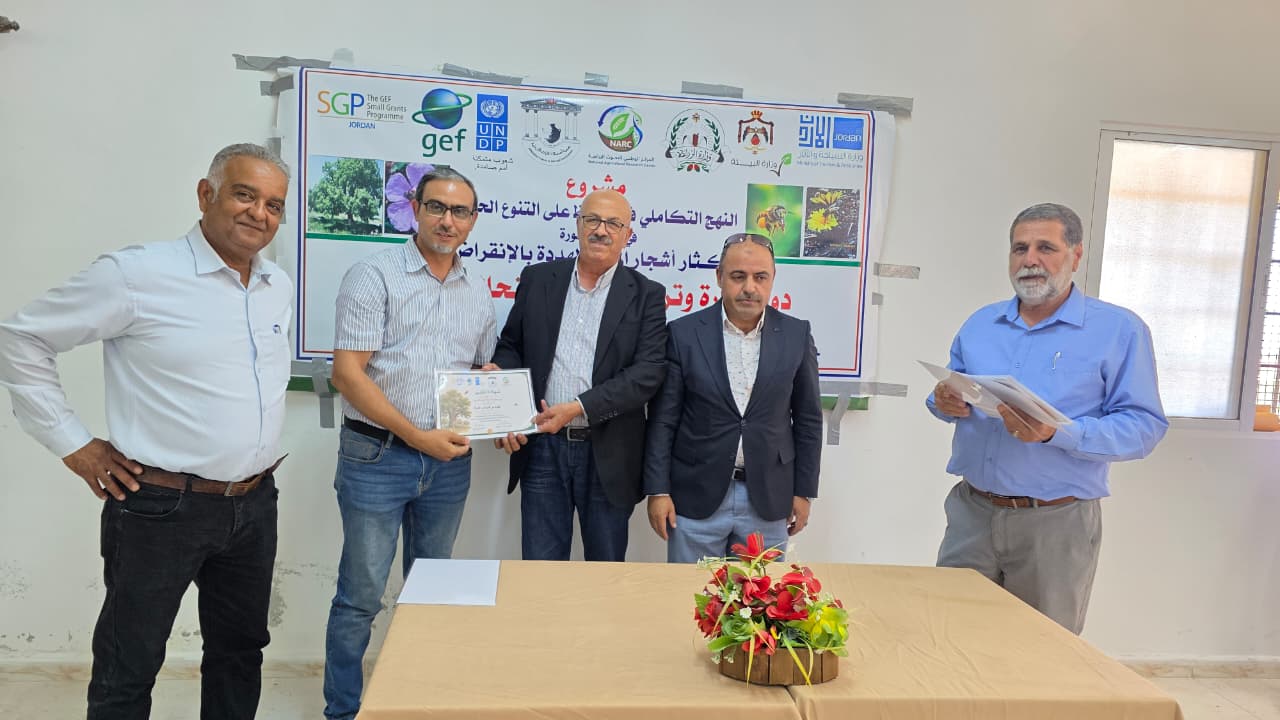
The Jordanian Friends of Heritage Association, a member of the Arab Network for Environment and Development (RAED), in cooperation with the National Agricultural Research Center, Maru Agricultural Research Station, held a foundational training course on honeybee breeding and management, with the participation of 12 members of the association and the local community. The course was held as part of efforts to support biodiversity and promote sustainable livelihoods in the Koura District.
The course was organized under the project “An Integrated Approach to Biodiversity Conservation in the Koura District and the Propagation of Declining Meloul Trees,” which aims to strengthen the link between environmental conservation and local community development by introducing sustainable productive activities based on the sound use and management of natural resources.
The three-day course featured an intensive training programme supervised by a distinguished group of experts from the National Agricultural Research Center at Maru Agricultural Station, led by Station Supervisor Eng. Ahmad Al-Batayneh, with the participation of researcher Dr. Osama Maqdadi and Eng. Firas Haddad. Participants received training that combined both theoretical and practical aspects of beekeeping and modern apiary management.
In this context, the first day of the course began at the business incubator of Maru Agricultural Station, where several key topics were addressed. These included an overview of the current status and prospects of the honeybee sector in Jordan, its economic and environmental importance, and the opportunities available for establishing entrepreneurial projects in beekeeping, given its potential as a promising sector capable of creating local job opportunities and promoting rural development.
The first day of training also covered Good Beekeeping Practices, with a focus on the scientific and extension-based principles that ensure the proper and sustainable management of apiaries, thereby contributing to increased production efficiency and improved quality of bee products.
The implementation of this course comes within the framework of the Jordanian Friends of Heritage Association’s efforts to strengthen the role of local communities in protecting biodiversity by integrating traditional knowledge with modern scientific approaches to natural resource management, in a manner that helps achieve a balance between environmental conservation and economic development.
The cooperation with the National Agricultural Research Center, Maru Agricultural Station, also reflects the importance of partnership between civil society organizations and official research institutions in transferring knowledge, applying modern technologies, and developing individuals’ capacities in the field of sustainable agricultural production, in line with the objectives of sustainable rural development.
This initiative forms part of broader efforts to support environmental and community-based projects in Jordan, particularly those related to the conservation of threatened plant species such as Meloul trees, and to enhance the sustainability of ecosystems in rural areas, thereby ensuring the continuity of natural resources for future generations.
The association also emphasizes that investment in beekeeping represents one of the promising development pathways that brings together environmental, economic, and social dimensions, given its role in supporting agricultural production through pollination, as well as providing sustainable sources of income for rural families.
The course activities are expected to continue over the coming days through practical sessions and field visits aimed at strengthening participants’ hands-on skills and enabling them to establish and manage small apiaries in accordance with modern scientific principles, contributing to the expansion of local production of honeybees and their derivatives in the region.