Beheira Sustainable Development Forum Organizes Workshop for Media Professionals to Support the Objectives of the TeraMED Initiative
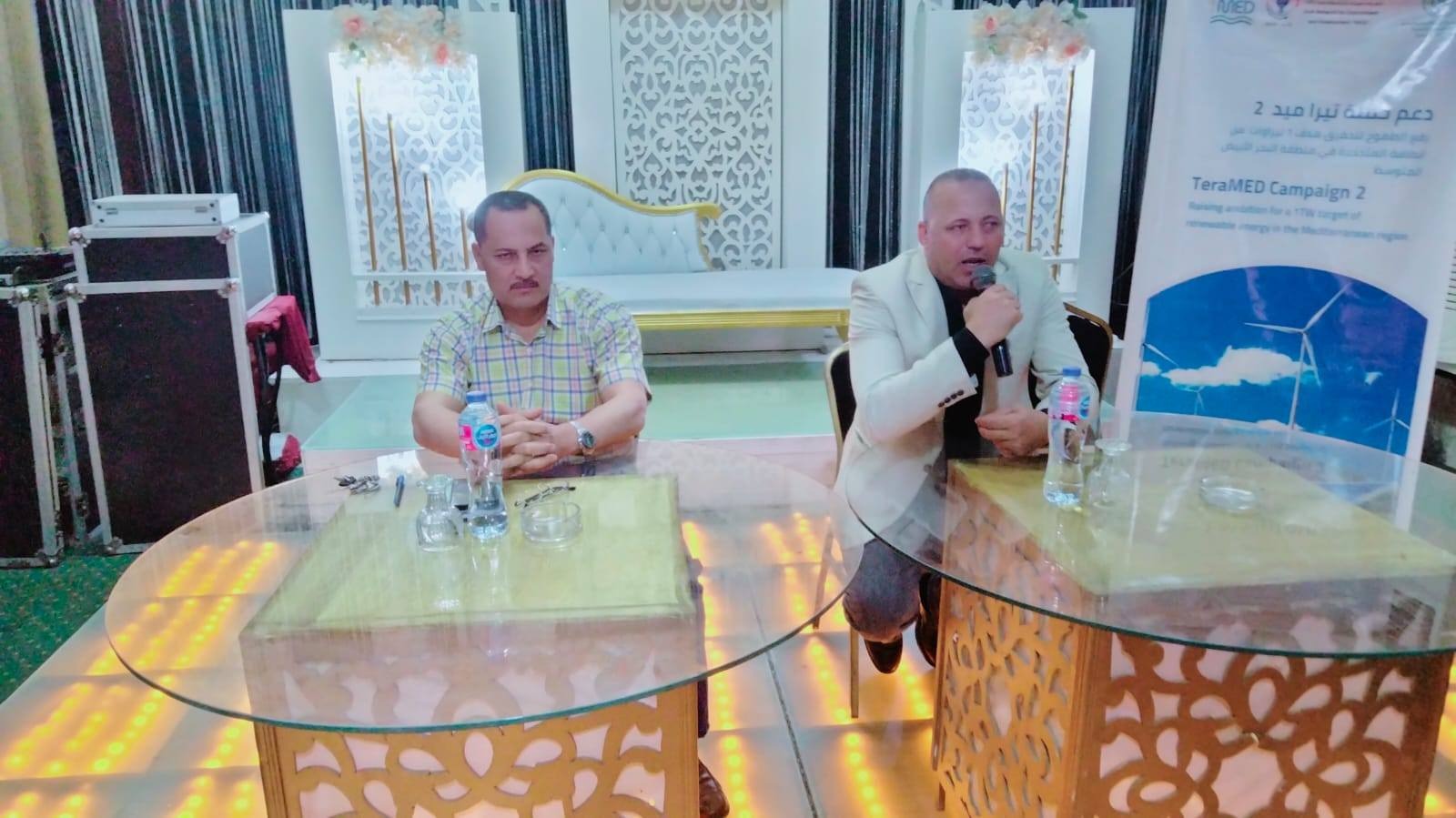
Under the slogan “Mediterranean Sun: Power for the World,” the Local Sustainable Development Forum in Beheira Governorate organized an expanded workshop for media professionals at the headquarters of the Agricultural Professions Syndicate in Damanhour. The workshop was held as part of efforts to raise community awareness of the importance of transitioning towards a green economy, and within the framework of the partnership between the Arab Network for Environment and Development (RAED) and the Egyptian Sustainable Development Forum (ESDF), in support of the objectives of the TeraMED Initiative to accelerate the transition to renewable energy.
The workshop was organized by the Egyptian Association for Community Development, chaired by Dr. Hani Mohamed Habiba, Coordinator of the Local Sustainable Development Forum in Beheira. It formed part of the activities of the Local Sustainable Development Forums in support of the TeraMED Initiative, which is being implemented across the Mediterranean Basin. RAED is coordinating the efforts of civil society organizations in the Arab countries of the Southern and Eastern Mediterranean to promote the regional initiative, which aims to increase renewable energy production capacity in the countries of the region to one terawatt by 2030.
The workshop witnessed broad participation from media professionals and journalists working in various newspapers and online platforms in Beheira Governorate, in addition to representatives of executive bodies, academia, and civil society organizations. The event was attended by Dr. Fayza Zayed, Undersecretary of the Ministry of Social Solidarity in Beheira. Participants emphasized that the initiative seeks to support national and regional directions towards greater reliance on renewable energy, particularly solar and wind energy.
Dr. Hani Habiba opened the dialogue session by welcoming the participants, before presenting some of the activities carried out by the Egyptian Association for Community Development under the TeraMED Initiative. He expressed his appreciation to the Arab Network for Environment and Development (RAED), headed by Dr. Emad Adly, for its efforts in supporting the achievement of the Sustainable Development Goals, including the TeraMED Initiative, which aims to promote the wider use of renewable energy, encourage the adoption of updated national strategies that integrate decentralized energy solutions, and strengthen green finance mechanisms, thereby contributing to the development of an integrated national vision for a sustainable energy transition.
The Chairman of the Egyptian Association for Community Development stated that Egypt possesses promising potential that qualifies it to become a regional hub for clean energy. He noted that Egypt enjoys an average of 13 hours of sunshine per day, including between six and seven hours of direct sunlight, representing a significant opportunity to expand solar energy projects and attract further investment in this vital sector. Dr. Habiba explained that Egypt currently produces around 10 gigawatts of renewable energy, a figure he described as not yet reflecting the scale of the country’s available potential, particularly given the wide diversity of renewable energy sources, including solar energy, wind energy, hydropower, and green hydrogen.
For his part, Eng. Emad Habliza, Director of Energy Conservation at the Beheira Electricity Distribution Company, affirmed during his address to media professionals that the Egyptian state attaches great importance to the issue of energy consumption rationalization. He provided a detailed overview of energy production sources and their respective shares, before discussing the main challenges, obstacles, and possible solutions, as well as various methods of rationalizing energy consumption as one of the key pillars for achieving economic and environmental sustainability.
The Director of Energy Conservation at Beheira Electricity Distribution Company added that the government has adopted a package of policies and measures aimed at improving electricity consumption efficiency, achieving a balance between production and consumption, and reducing economic burdens. He stressed that the success of these efforts is closely linked to citizens’ awareness and their adoption of responsible consumption practices, emphasizing that responsibility in this area is shared between the state and society.
Eng. Habliza also reviewed some of the economic advantages of using solar energy in homes and various facilities. He explained that installing a solar power station on rooftops can cover annual electricity consumption, with the possibility of selling surplus electricity to distribution companies. He added that the expected lifespan of solar power stations is around 20 years, noting that the cost of establishing household solar stations can be recovered within a few years through reduced electricity bills and the generation of economic returns from selling the produced energy.
The workshop featured extensive discussions among media professionals, experts, and participants, focusing on the importance of promoting a culture of clean energy use among citizens, farmers, business owners, and tourist villages. Participants highlighted clean energy as one of the key solutions to address rising electricity consumption and reduce pressure on conventional energy sources.
The workshop concluded by reaffirming the continuation of the TeraMED campaign in organizing seminars and workshops across various governorates, with the aim of strengthening environmental awareness, encouraging investment in renewable energy, supporting national efforts to adopt clean energy solutions, and expanding local partnerships in support of sustainable development.