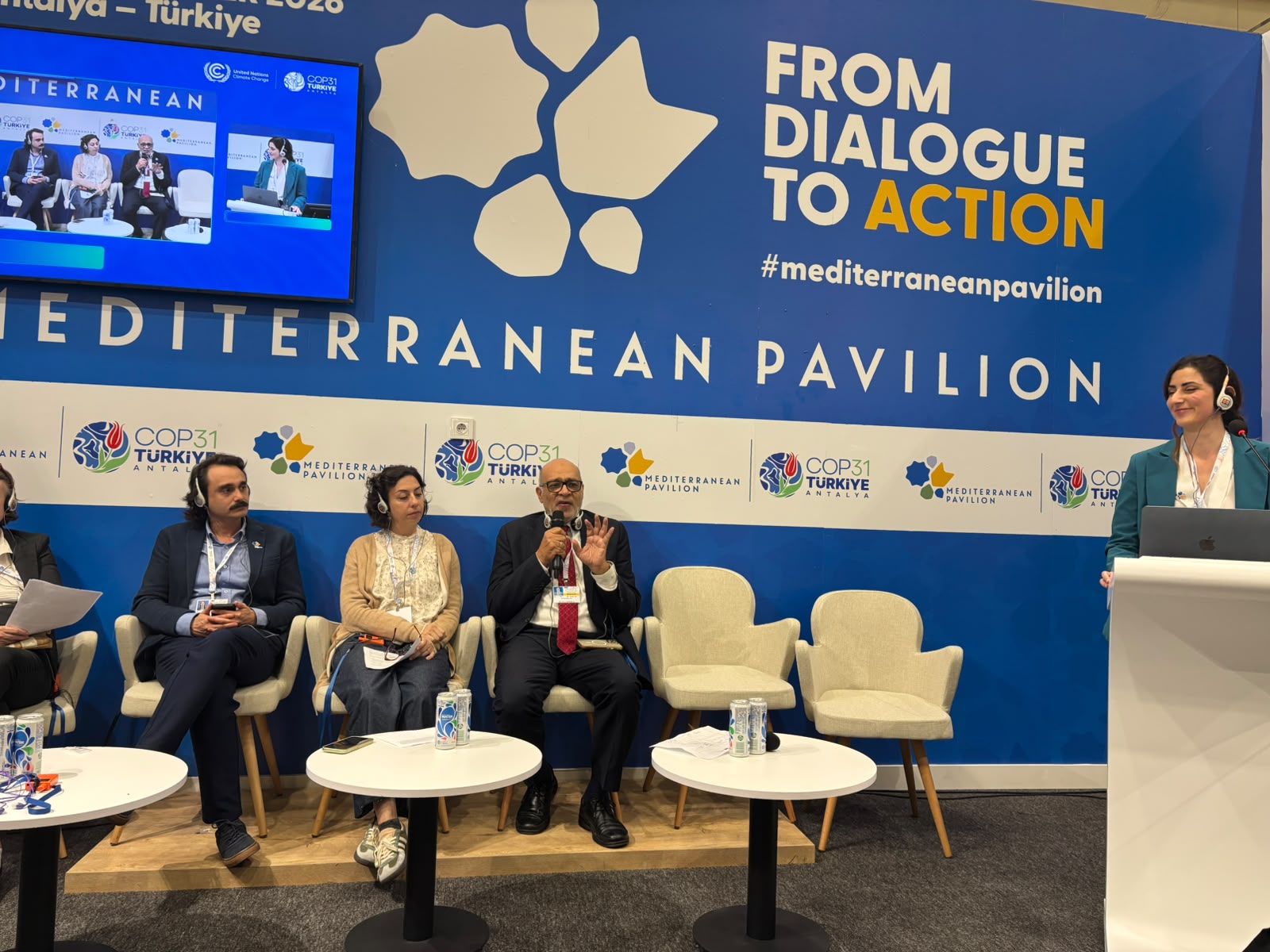
Dr. Emad Adly, General Coordinator of RAED, took part in a side event at the Mediterranean Pavilion in the Blue Zone of the UN Climate Change Conference (COP31) in Antalya, Türkiye. The session was titled “Blue Economy and Regenerative Tourism: Building Fair and Equitable Opportunities for Coastal Communities.”
Adly outlined RAED’s work to advance the blue economy and sustainable development, highlighting initiatives in waste management, improved access to water resources and renewable energy. He explained how these efforts can help improve quality of life and support the long-term sustainability of local communities.
He stressed the importance of strengthening ties among local communities, civil society organisations and individuals. These relationships, he said, help residents identify their own needs, contribute to the implementation of development initiatives and share directly and equitably in the benefits of environmental and economic projects.
Adly highlighted the central role of young people in the transition to a sustainable economy. He pointed to RAED’s renewable energy initiatives, which aim to expand employment opportunities for young people by connecting environmental solutions with local economic and social needs.
He also called for closer links between renewable energy and sustainable tourism. Both sectors, he said, can support economic development, create jobs and contribute to healthier, safer places to live, particularly in coastal communities whose natural and economic assets position them to benefit from the blue economy.
Adly described young people as key partners in designing and implementing development initiatives and driving change in their communities. He emphasised that investing early in their skills and involving them in environmental and development work can accelerate progress towards a more sustainable future.
The panel also featured Céline Kauffmann, Director of Programmes at the Institute for Sustainable Development and International Relations (IDDRI); Yaprak Arda, Marine Programme Officer at IUCN Mediterranean (IUCN Med); and Aygün Karlı, a youth leader with the Anna Lindh Foundation. Giulia Palestracci, representing eco-union and the Blue Tourism Initiative, moderated the discussion.
The discussion examined existing blue economy practices and the tangible benefits they deliver for people and nature. Panellists also addressed inclusion and equity, focusing on how coastal communities can participate in decision-making and how benefits can be distributed fairly.
RAED’s participation reflects its commitment to regional cooperation and knowledge exchange, and to linking environmental protection with economic and social opportunities. Through this work, the network aims to strengthen the ability of Mediterranean communities to respond to climate challenges and advance the Sustainable Development Goals.