Amid growing challenges of water scarcity and climate change
across the Arab region, the Arab Network for Environment and Development (RAED)
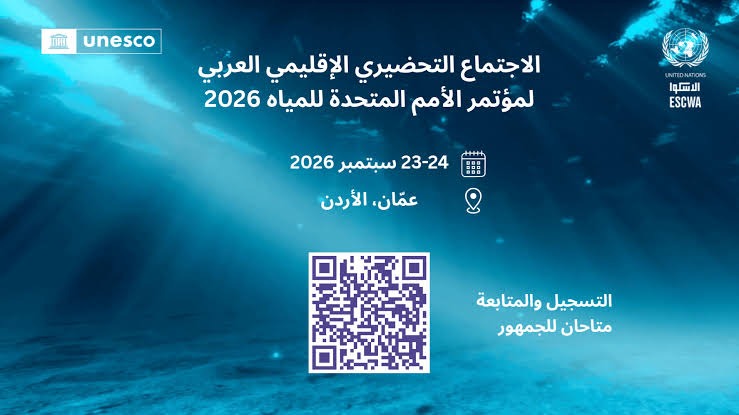
participated in the Regional Preparatory Meeting for the 2026 United Nations
Water Conference, held in Amman, Jordan, bringing forward the perspectives of
Arab civil society on the future of water resources and the need to strengthen
governance, community participation, and regional cooperation.
During the meeting, RAED stressed that access to safe
drinking water and sanitation is not merely a service or development issue, but
a fundamental human right closely linked to health, food security, social
justice, and quality of life. The Network called for greater participation of young
people and vulnerable groups in water resource management and decision-making,
particularly in communities most affected by water scarcity and the impacts of
climate change.
RAED’s interventions focused on the themes of “Water for
People” and “Water for Cooperation,” emphasizing the need to address water
within an interconnected framework encompassing energy, food, and the
environment. It also highlighted the importance of strengthening cooperation
among countries sharing water basins and promoting the exchange of data,
knowledge, and expertise to support the sustainable management of transboundary
water resources.
Beyond policy discussions, RAED presented several practical
initiatives and experiences aimed at strengthening water security and climate
resilience. These included the ABCDryBASIN project, implemented by the Network
in Egypt to support the sustainable and equitable management of resources in
dryland areas, alongside initiatives to improve water-use efficiency, enhance
environmental awareness, and strengthen partnerships among different stakeholders.
The regional consultations in Amman concluded with the
formulation of a final document representing the Arab position ahead of the
2026 United Nations Water Conference, scheduled to take place in Abu Dhabi,
United Arab Emirates. The document outlined four main priority areas.
The first focuses on accelerating progress towards
Sustainable Development Goal 6 (SDG 6) and closing existing gaps in access to
water and sanitation services. The second addresses finance, innovation, and
technology, including mobilizing investment, developing infrastructure, and
advancing modern solutions and technologies.
The third priority focuses on governance and regional
cooperation in shared water basins, emphasizing dialogue and the exchange of
information and expertise among countries. The fourth addresses the needs of communities
affected by conflict, displacement, and instability, with a focus on ensuring
their access to safe water and sanitation services.
RAED’s participation in the regional consultations reflects
the Network’s commitment to strengthening the role of Arab civil society as a
partner in shaping water policies and advancing the transition from
recommendations to practical action that enhances water security and safeguards
communities’ right to safe water and sustainable sanitation services.