With RAED’s Participation: Regional Meeting in Cairo Outlines Egypt’s Energy Transition Between Efficiency, Competitiveness, and Enhanced Export Capacity
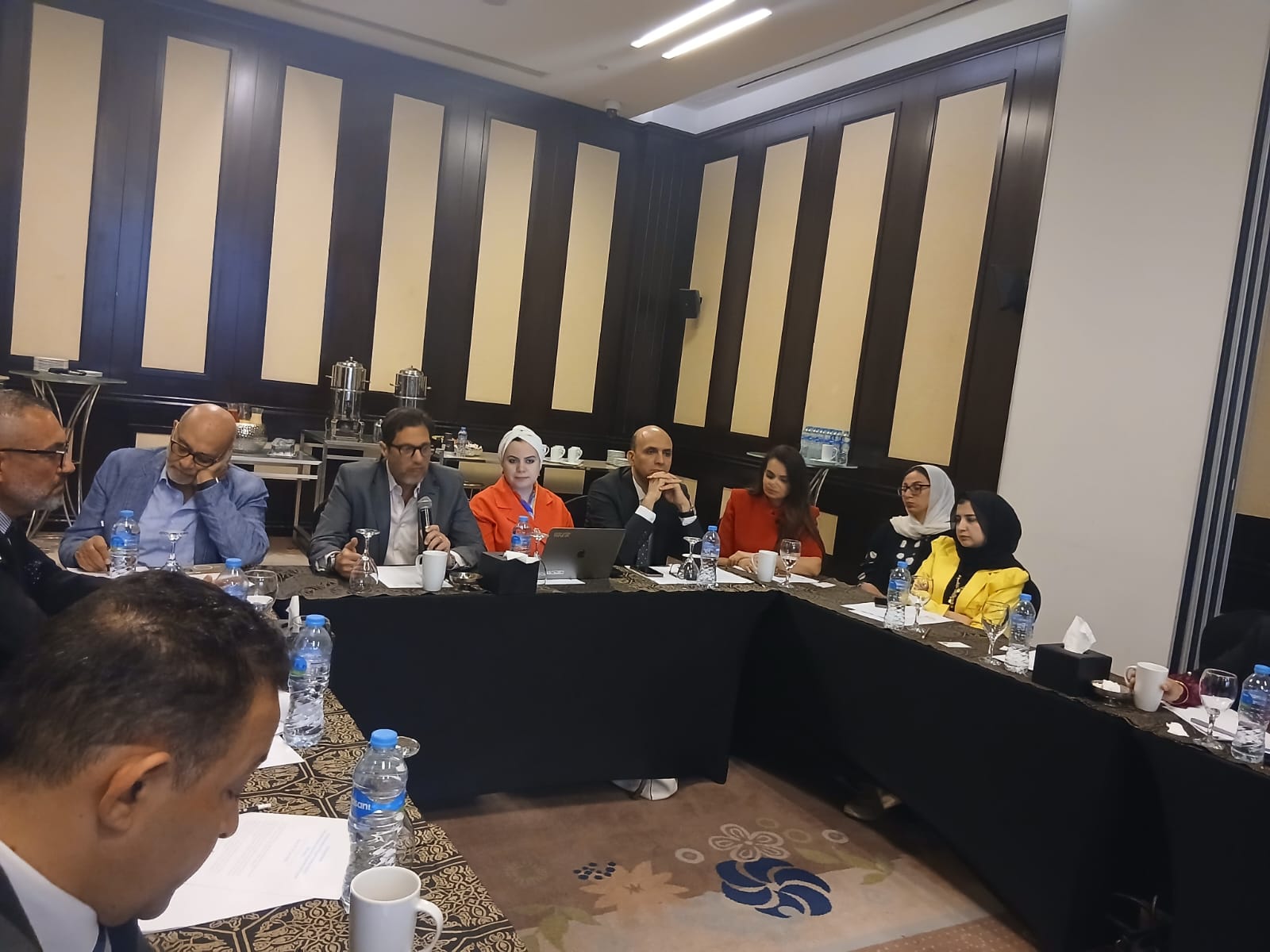
Amid the accelerating global transformations in the energy sector and its growing direct connection with climate, food security, and water security issues, Cairo hosted one of the most prominent specialized regional dialogues on the future of Egypt’s energy system. The closed workshop, titled “Egypt’s Energy System Transformation: Competitiveness, Industrial Alignment, and System Efficiency,” was organized by the PIE North Africa Initiative on 1–2 July 2026. It brought together a wide range of participants, including representatives of the Egyptian government, regional and international institutions, the business sector, think tanks, and experts specialized in energy, industry, investment, and public policy.
The participation of the Arab Network for Environment and Development (RAED), headed by its General Coordinator, Dr. Emad Adly, together with RAED’s working team, represented a pivotal contribution to the discussions, given the network’s role as a regional actor supporting a just and sustainable energy transition, particularly within the framework of efforts linked to the TeraMED Initiative, which aims to reshape energy systems in the Middle East and North Africa on foundations that are more efficient, sustainable, and equitable.
The discussions showed that Egypt’s energy sector is undergoing a critical transitional phase, moving beyond a focus on expanding production capacity and infrastructure towards redefining priorities, where operational efficiency, maximizing added value, and linking energy with manufacturing and exports become the main drivers of the next phase.
Participants agreed that, after successfully establishing a strong infrastructure base for the energy sector, whether in natural gas, electricity, or renewable energy sources, Egypt now faces a more complex challenge: achieving the highest possible economic, social, and environmental return from these major investments by improving the efficiency of the system as a whole, rather than merely increasing production.
In this context, the importance of integrating energy policies with industrial and investment policies emerged as a fundamental prerequisite for strengthening the competitiveness of the Egyptian economy and enabling it to integrate more deeply into regional and global value chains, especially in light of ongoing shifts in international trade standards related to sustainability and carbon.
During the workshop, the Arab Network for Environment and Development (RAED) emphasized that the energy transition is no longer a purely technical or governmental matter, but rather a complex socio-economic and environmental process that requires multi-level partnerships, in which civil society is an essential partner, not a complementary actor.
Dr. Emad Adly explained that a just energy transition is one of the most sensitive issues in the Arab region, given the intersection of climate challenges with economic pressures and food and water security concerns. He noted that the absence of justice in the distribution of the impacts and opportunities of the transition could lead to development and social gaps if not managed in a comprehensive manner.
He added that RAED is playing an increasingly important regional coordination role in bringing together Arab civil society organizations around shared objectives that support the TeraMED Initiative, by promoting multi-stakeholder dialogue among governments, the private sector, and civil society; contributing to public policy development; building institutional capacities; and facilitating the exchange of expertise among Arab countries.
He further stressed that the network is working to advance regional consensus on the priorities of the energy transition, ensuring that future policies strike a better balance between economic, social, and environmental dimensions, while focusing on preventing the exclusion of the most vulnerable communities from the benefits of the transition towards a green economy.
One of the most significant conceptual shifts revealed by the workshop was the redefinition of the concept of “energy security.” It is no longer limited to ensuring the continuity of supply, but is now directly linked to the efficient use of resources and the achievement of maximum added value from the energy system.
Participants affirmed that diversifying energy sources, including the expansion of solar energy, wind energy, and green hydrogen, is a key pillar for enhancing system resilience. However, this expansion requires continuous review of policies and implementation plans in line with rapid technological and economic developments.
The discussions also emphasized that developing electricity transmission and distribution networks represents one of the most important structural challenges to absorbing increasing renewable energy capacities, making investment in smart grids and modern infrastructure a decisive condition for the success of the energy transition in the coming phase.
The workshop reflected a growing recognition that the future of Egyptian industry has become dependent on its ability to access clean, stable, and competitively priced energy, especially amid the rising environmental requirements in international markets and the introduction of carbon pricing mechanisms as a new regulatory tool in global trade.
In this regard, participants discussed the need to reshape the relationship between energy and industry in an integrated manner, in order to strengthen the competitiveness of Egyptian exports and enhance the national economy’s ability to adapt to global changes.
An ambitious vision was also presented to raise the local manufacturing share of energy components and equipment to around 40%, thereby supporting the national industrial base, creating new job opportunities, and deepening local value chains in the energy sector.
The discussions agreed that the success of the energy transition cannot be achieved without developing an innovative and sustainable financing system that includes expanding the role of the banking sector, developing green finance instruments, and establishing specialized funds to support clean energy projects.
Emphasis was also placed on the importance of developing flexible financing models, including mechanisms that allow financing in foreign currencies with local repayment, thereby helping to ease the financial burden on investors and stimulate investment in the sector.
In parallel, the human element emerged as a cornerstone of the transition process. Participants stressed the need to expand training and capacity-building programs and to qualify national cadres to meet the needs of a changing labor market, particularly in the fields of clean energy and green industries.
The workshop concluded with a central message: the energy transition cannot succeed without broad social and institutional consensus around its objectives and priorities.
In this context, RAED affirmed that advocacy and awareness campaigns are among the key tools for ensuring the success of the TeraMED Initiative, noting that civil society has the capacity to build bridges between decision-makers and local communities, thereby strengthening participation in the formulation of sustainable energy policies.
The network also called for enhanced regional cooperation among Arab civil society organizations and for expanding the exchange of expertise, in a way that accelerates the pace of a just energy transition at the regional level.
At the conclusion of its proceedings, the workshop reflected a clear direction towards redefining Egypt’s energy system as an integrated system that combines efficiency, competitiveness, sustainability, and social justice, rather than as a traditional production sector alone.
The discussions affirmed that the next phase requires broad partnership involving the government, the private sector, financial institutions, civil society, universities, and think tanks, in order to build a development model that is better able to confront future challenges and strengthen Egypt’s position as a regional hub for energy and its related value chains.