Hosted by the Young Muslim Women Association under the TeraMED Initiative Beni Suef Workshop Calls for a Stronger Media Role in the Transition to Clean Energy
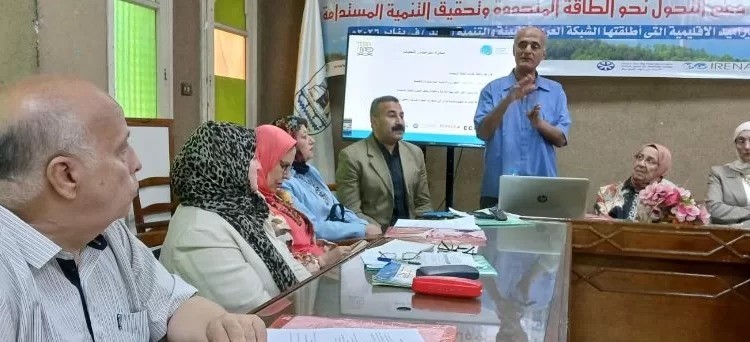
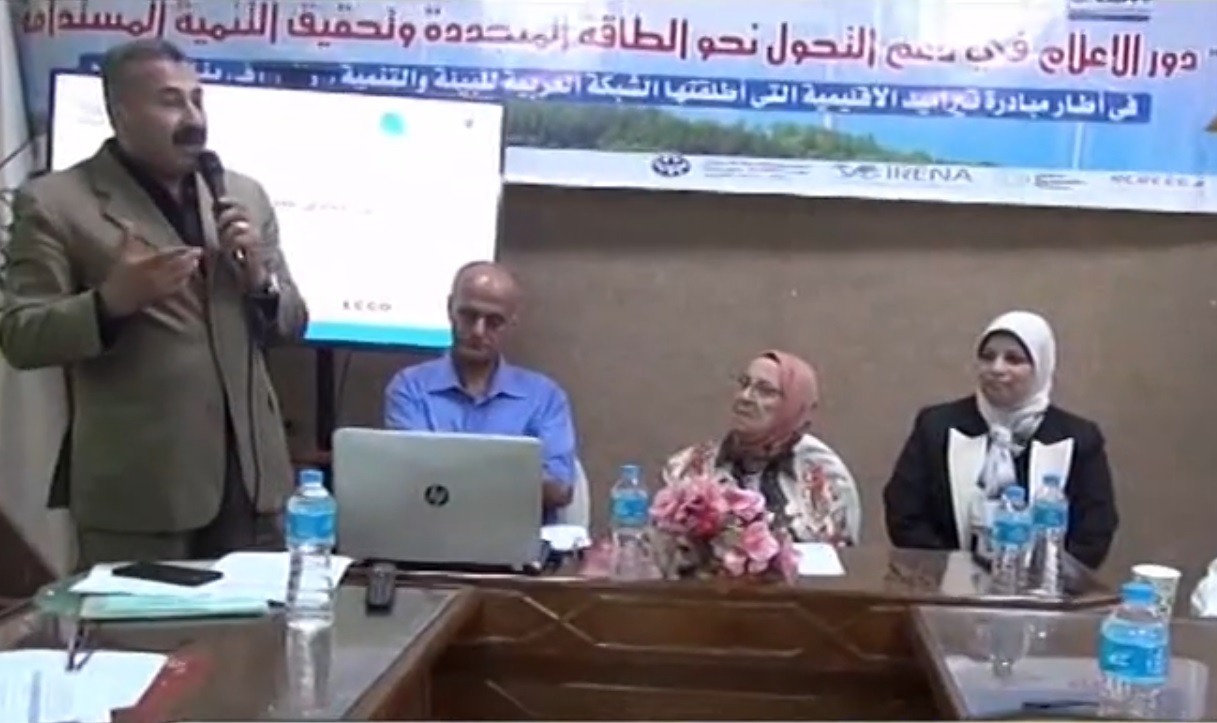
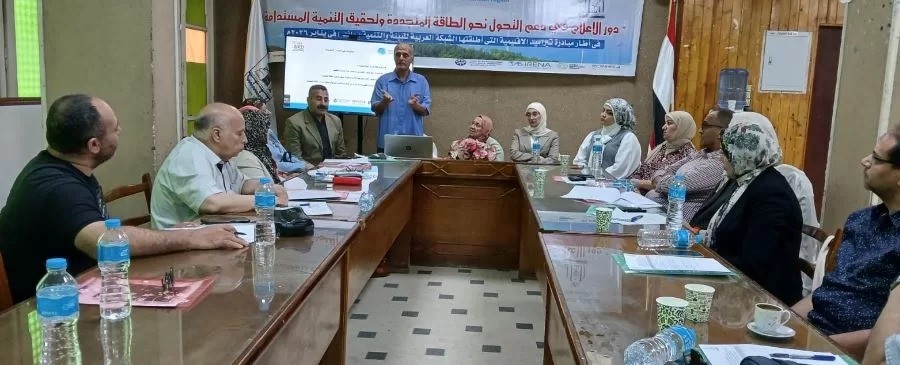
A specialized workshop for journalists and media professionals, entitled “The Role of the Media in Supporting the Renewable Energy Transition and Achieving Sustainable Development,” was held in Beni Suef Governorate. The workshop formed part of the Arab Network for Environment and Development’s (RAED) efforts to raise awareness of sustainability and clean energy issues and support the objectives of the TeraMED Initiative, which seeks to accelerate the transition towards more sustainable and equitable energy systems across the Mediterranean region.
The workshop was hosted by the Young Muslim Women Association, coordinator of the Local Sustainable Development Forum in Beni Suef Governorate. It aimed to strengthen the capacities of journalists, media professionals and personnel working across different media platforms to address renewable energy, climate change and sustainable development issues in a scientifically sound and professional manner. This would contribute to community awareness efforts and support national policies related to the green transition.
In her opening remarks, Ms. Zeinab Abdelhamid El-Sheikh, Chairperson of the Association’s Board of Directors, emphasized the importance of building effective partnerships among civil society organizations, media institutions and government bodies to advance sustainable development. She highlighted the growing role of civil society organizations in promoting environmental awareness and strengthening community participation in development issues.
For her part, Ms. Amal Azzouz, Undersecretary of the Ministry of Social Solidarity in Beni Suef, stressed the importance of integrating sustainability and renewable energy concepts into the governorate’s development programmes. She noted that the media is one of the most important tools for communicating development messages to citizens and encouraging their active participation in local development efforts.
The workshop sessions were moderated by Dr. Mohamed Saad Amin, Undersecretary of the Ministry of Information for the Northern Upper Egypt Region, who emphasized the need to develop media professionals’ skills in addressing environmental and climate-related issues. He also underscored the importance of relying on accurate information and credible scientific sources when covering energy and sustainability topics.
During the workshop, journalist and writer Mahmoud El-Essawy, Media Adviser to RAED, delivered a presentation outlining the objectives and key pathways of the TeraMED Initiative and its role in supporting the transition to renewable energy and improving energy efficiency.
He also highlighted the media’s role in advancing the initiative’s objectives by raising public awareness of the benefits of clean energy, showcasing successful models, monitoring government policies and programmes related to sustainable energy, and helping to build public support for the transition towards a green economy.
El-Essawy noted that the media is no longer merely a channel for transmitting information but has become a key partner in supporting sustainable development efforts. This role includes simplifying scientific concepts related to energy and climate and encouraging citizens to adopt environmentally responsible practices.
The workshop also featured a scientific presentation by Dr. Samaa Emam El-Daq, Dean of the Faculty of Postgraduate Studies for Advanced Sciences at Beni Suef University, entitled “A Better Environment for Our Homes: How Renewable Energy Contributes to Improving Quality of Life.”
During her presentation, she reviewed the environmental, health and social benefits of renewable energy sources and their role in reducing pollution, improving air quality and lowering the emissions responsible for climate change.
She explained that expanding the use of clean energy contributes to energy security, reduces long-term energy costs and supports the state’s efforts to address environmental and climate challenges. She also presented several practical applications of renewable energy at household and local community levels, emphasizing the importance of innovation and modern technologies in enabling the transition towards more sustainable patterns of production and consumption.
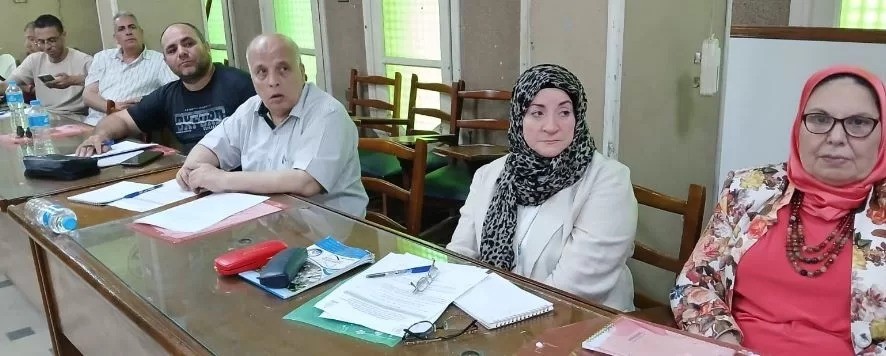
The workshop included extensive discussions between participants and speakers on the current status of renewable energy in Egypt, the role of local media in promoting environmental awareness, and methods for simplifying scientific information for the public. Participants also discussed the importance of providing reliable sources of information for journalists and media professionals working in this field.
Participants expressed growing interest in developing their environmental journalism skills and producing specialized media content on energy and sustainable development. They emphasized the need for additional training programmes to improve the quality and effectiveness of media coverage of environmental issues.
The workshop concluded with several key recommendations, including strengthening training and capacity-building programmes for media professionals in the fields of renewable energy, climate change and sustainable development. It also called for encouraging the production of specialized media content that supports the clean energy transition and raises public awareness, while expanding cooperation among media organizations, universities, civil society institutions and subject-matter experts.
The recommendations further called for the establishment of databases and access to credible scientific information sources to support environmental media coverage, greater support for local initiatives promoting sustainability and renewable energy, and the continued organization of similar events across different governorates as part of the TeraMED Initiative’s activities.
At the conclusion of the workshop, participants affirmed that the successful transition towards clean energy and the achievement of the Sustainable Development Goals require genuine partnerships among government institutions, civil society and the media. Such partnerships are essential to building public awareness capable of supporting green development pathways and contributing to a more sustainable future for generations to come.