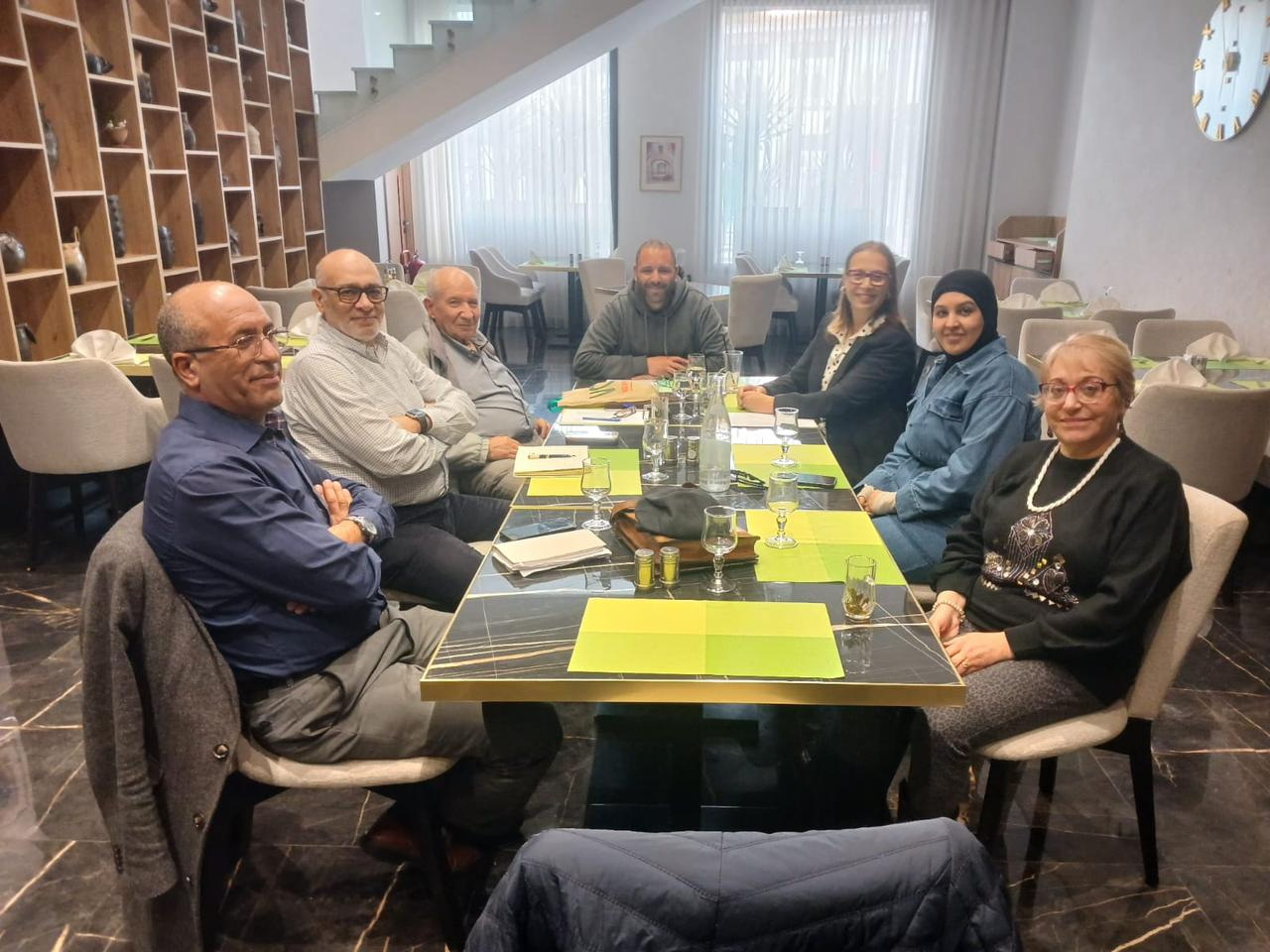
RAED Holds Coordination Meeting in Tunisia to Strengthen National Dialogue on the TeraMed Initiative
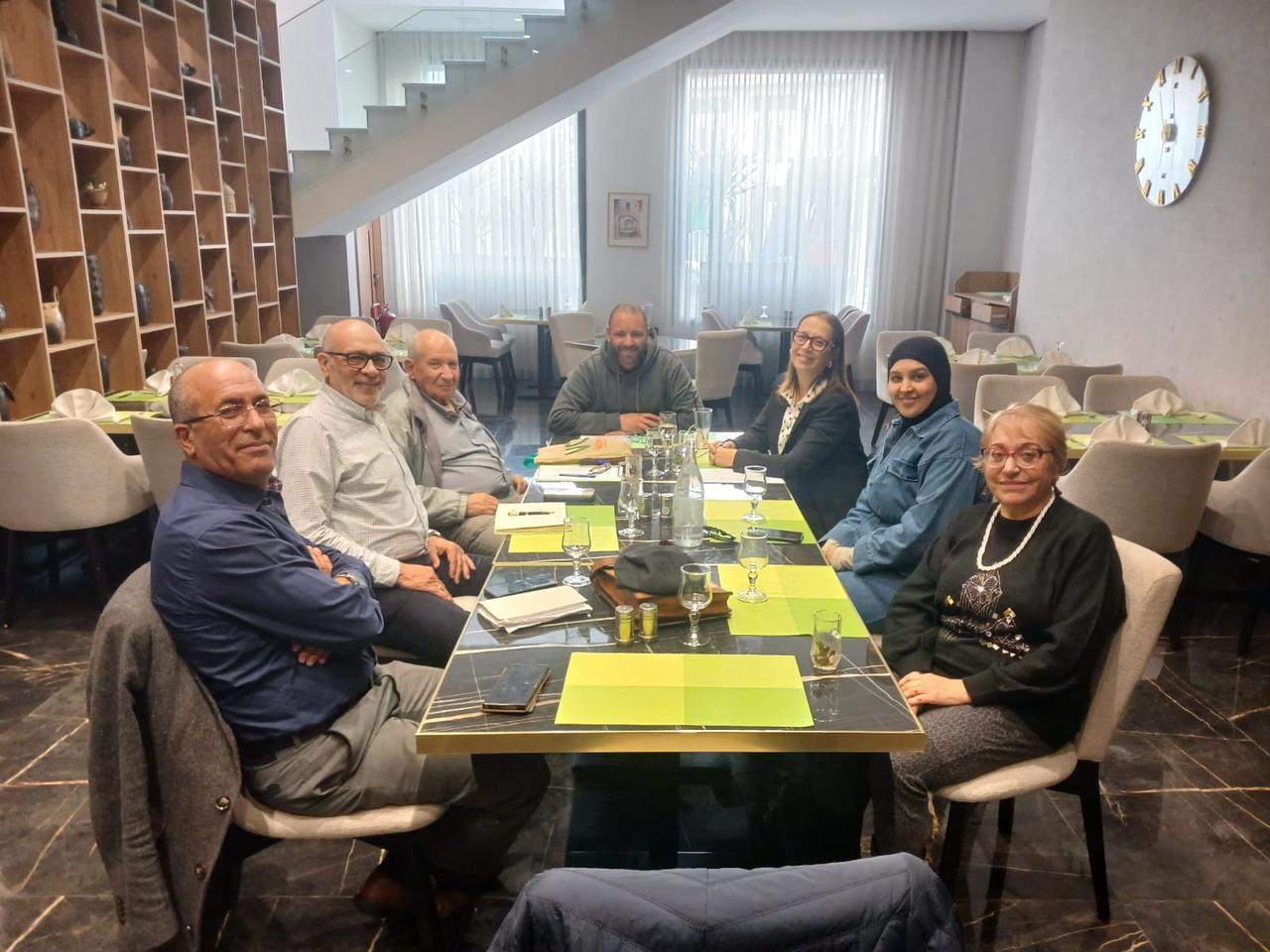
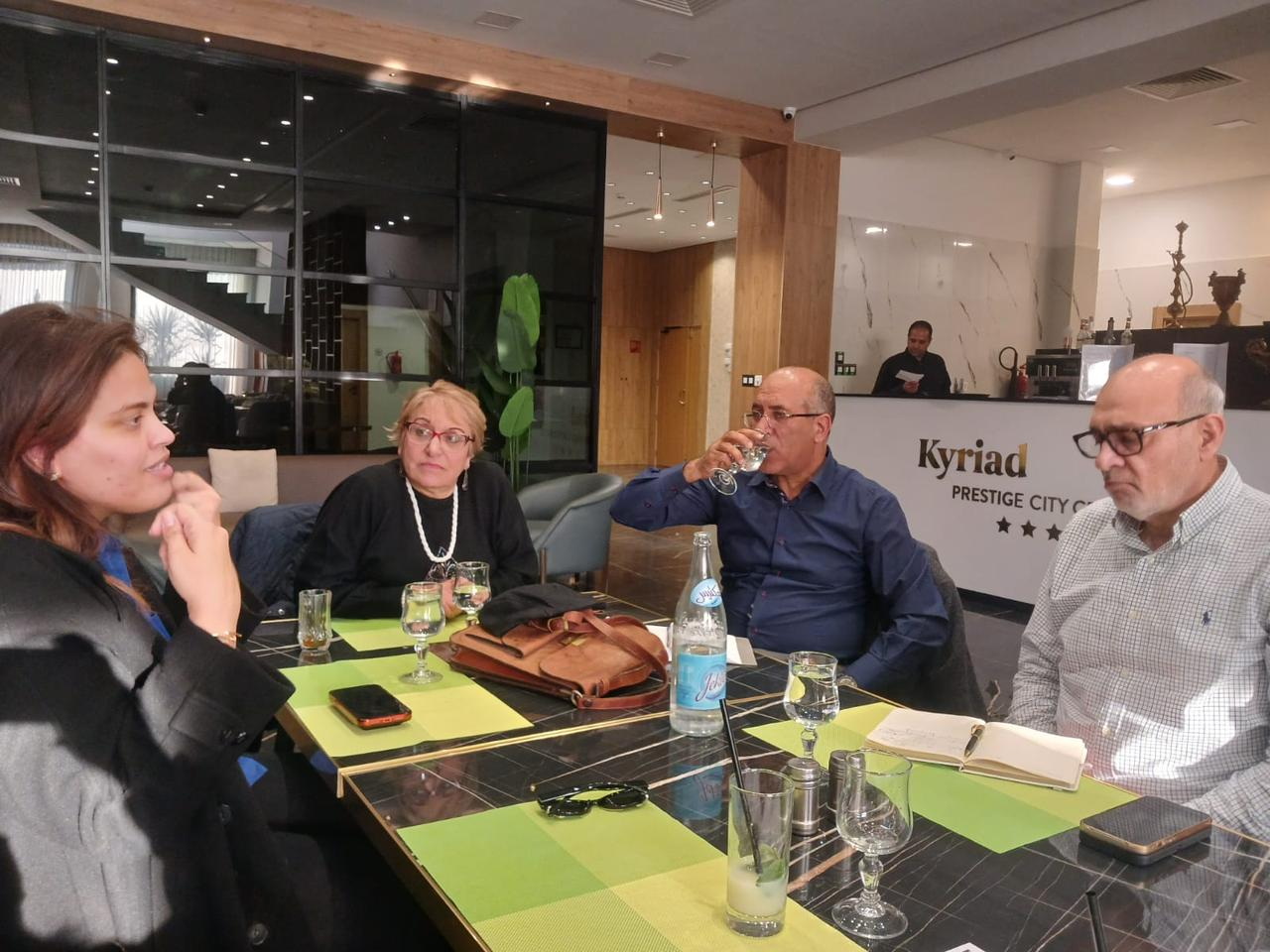
The Arab Network for Environment and Development (RAED) held a coordination meeting in Tunisia, chaired by Dr. Emad Adly, RAED General Coordinator, with the participation of several network members involved in implementing the TeraMed initiative from civil society organizations in the Republic of Tunisia. The meeting was held as part of ongoing efforts to strengthen national dialogue around the initiative and expand its impact at both local and national levels.
The meeting took place on the sidelines of the participation of RAED’s General Coordinator in the Desertif’Action 2026 conference, held on the Tunisian island of Djerba. The meeting brought together a distinguished group of RAED representatives and local partners in Tunisia, including Dr. Najwa Bouraoui, RAED Coordinator in Tunisia, representing the Association for Environmental Protection and Sustainable Development in Bizerte; Dr. Habib Ben Boubaker from the Kelibia City Preservation Association; Ms. Abir Yahiaoui from the Natural Resource Governance Institute; Mr. Youssef Nouri, RAED National Coordinator, representing the Association for the Protection of Nature and Environment in Kairouan; Ms. Afaf Zeddam from the Local Democratic Agency Association in Kairouan; Ms. Fathia Omari; and Mr. Ziad Biouli from the Development Without Borders Association in Tataouine.
The meeting discussed several key priorities aimed at supporting and accelerating the implementation of renewable energy projects in Tunisia. Participants emphasized the importance of engaging Parliament in this process by strengthening the role of parliamentarians and technical committee advisors in supporting legislation and policies that promote clean energy, thereby creating a favorable regulatory environment for investment in this vital sector. Participants also proposed launching a mechanism to select “Local Champions” for the TeraMed initiative, recognizing prominent figures from among parliamentarians, youth leaders, and civil society representatives who actively contribute to advancing the initiative’s objectives. This proposal aims to encourage inspiring models and promote positive competition.
Regarding youth engagement, participants stressed the importance of expanding youth participation in the initiative, not only as beneficiaries but also as leaders of innovative renewable energy projects. Such involvement would enhance their capacities and provide meaningful opportunities to contribute to the transition toward a green economy. The discussion also highlighted the importance of engaging specialized local associations working in the energy sector, particularly in southern Tunisia, where participants noted that more than 20 active associations could contribute their expertise to implementing initiative programs at the local level.
In terms of media engagement, participants agreed that both local and national media represent a key tool for supporting the TeraMed action plan by raising awareness about the importance of renewable energy and highlighting success stories and distinguished initiatives. This would enhance public engagement with the initiative’s objectives. The meeting also emphasized the importance of developing an integrated communication strategy among stakeholders and strengthening coordination with communication and media focal points within the initiative to ensure consistent messaging and maximize outreach and impact.
Participants also discussed the need to develop a unified visual identity for the initiative, including designing templates for promotional materials such as banners and publications, in order to establish a clear and cohesive public image for TeraMed. Additionally, it was agreed to form a national jury committee responsible for selecting the initiative’s “Champions” at the Tunisia level, with selected winners nominated to participate in the regional competition, thereby strengthening the initiative’s presence at the Arab regional level.
The meeting concluded with a set of key recommendations, including strengthening cooperation between Parliament, civil society organizations, and youth to ensure the sustainability of initiatives; developing a comprehensive media plan targeting multiple levels; accelerating the development of the initiative’s visual identity; and activating the national jury committee to begin the selection and nomination of outstanding models.