RAED Presents the Objectives of the TeraMED Initiative at the CNGRC Under the Organization and Patronage of King Salman International University in Sharm El-Sheikh
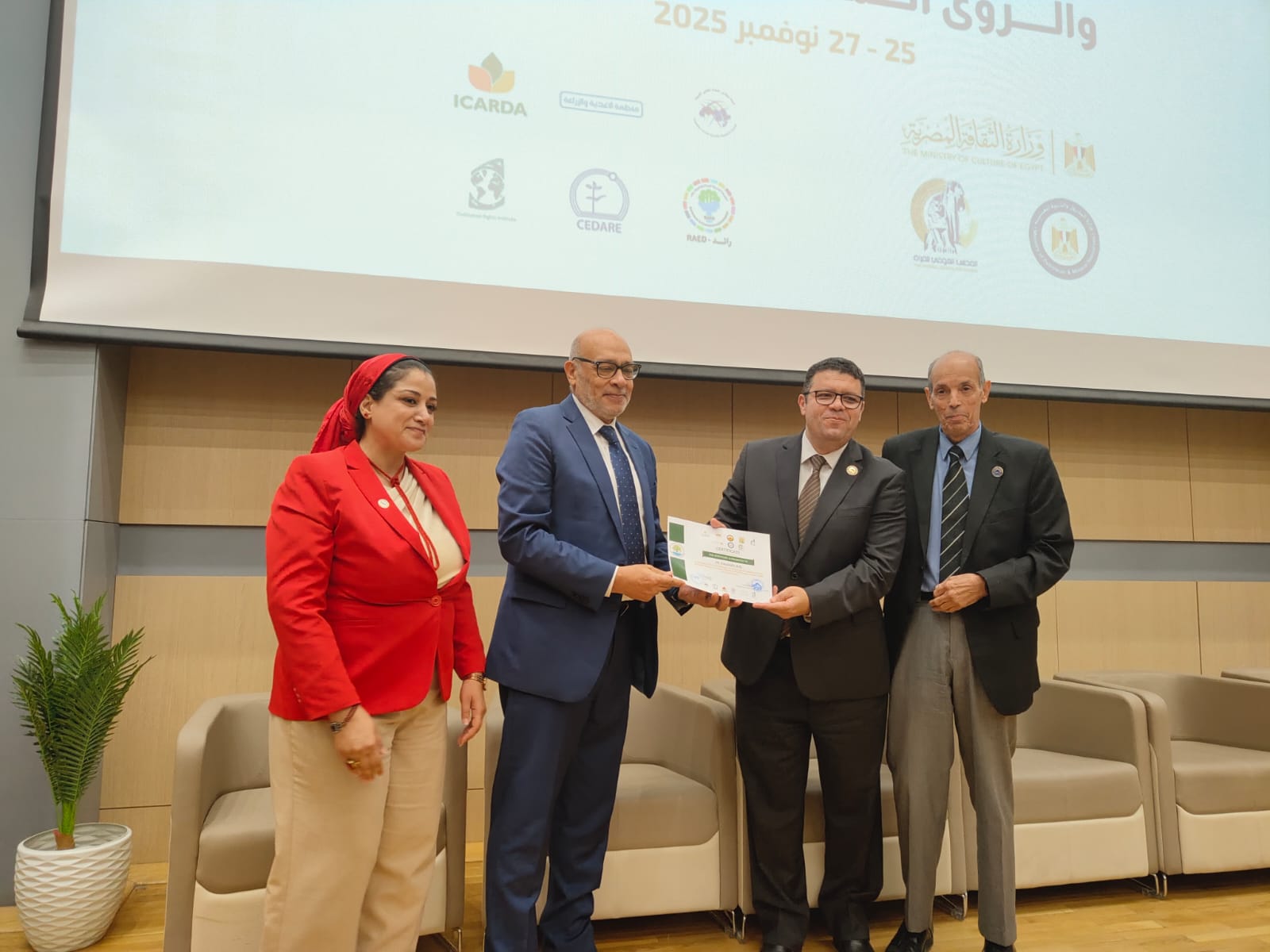
Sharm El-Sheikh hosted the International Conference on Nature and Genetic Resources Conservation (CNGRC) from 25 to 27 November 2025 under the theme “Achievements of the 2030 Strategy and Future Insights,” with broad participation from researchers, experts and representatives of national, regional, and international institutions. The conference was organized under the patronage of King Salman International University, whose strong scientific and research presence constituted one of the main pillars of this edition, as the conference served as an effective national platform for discussing environment and development issues, climate change challenges, biodiversity conservation and support for the transition to renewable energy.
Over the course of three days, the scientific sessions addressed the pathways of the “nexus” between climate change, natural resources and water, food and energy security, in addition to challenges related to air, water and soil pollution, also practical solutions for scaling up clean energy and supporting the green transition. These themes were closely aligned with the priorities of the Arab Network for Environment and Development (RAED), which played a pivotal role in the conference by leading a national dialogue session under the “Renewable Resources” track, alongside its broader leadership role in the TeraMED Initiative at both the national and regional levels.
RAED delivered one of the conference’s flagship dialogue sessions entitled “Just Energy Transition and its Role in Supporting National Pathways to Enhance Water, Food, and Environmental Security” ( WEFE Nexus Approch and Achieving the TERAMED Goals). This session directly reflected RAED’s role in implementing its national project “Strategic Advocacy for Renewable Energy in Egypt,” as well as its leadership of the TeraMED Initiative in the Mediterranean. TeraMED is the first initiative of its kind aimed at accelerating the mainstreaming of renewable energy into national policies and promoting a just energy transition through green finance, community partnerships, and practical applications.
The session brought together a distinguished group of professors from King Salman International University, along with experts from the Ministry of Water Resources and Irrigation, the New and Renewable Energy Authority, the Regional Center for Renewable Energy and Energy Efficiency (RCREEE) and the Egyptian Sustainable Development Forum (ESDF), in addition to representatives of the private sector, parliament and civil society organizations from various governorates. Discussions focused on the role of legislative, scientific and research institutions in supporting and localizing renewable-energy applications in the agricultural, water, food and industrial sectors, as well as on mechanisms for integrating renewable energy into water, food and environmental security pathways in accordance with the nexus approach, as a core pillar for achieving the TeraMED target.
Speakers highlighted a range of renewable-energy models and applications that are feasible for implementation at the governorate and sectoral levels, in support of Egypt’s transition to clean energy. Participants also discussed how these applications can contribute to advancing the TeraMED plan and translating it into clear, actionable steps that enhance water, food and environmental security.
The session concluded with several key recommendations, most notably King Salman International University’s confirmation of its readiness to cooperate with the TeraMED Initiative and support its activities in both awareness-raising and practical implementation. Participants also called for the joint adoption of the TeraMED target within development programs, particularly in desert areas, given the innovative models the initiative offers to strengthen the nexus between water, energy, agriculture and ecosystems. In addition, they emphasized that effective expansion of renewable energy requires translating national plans into implementable programs at the levels of governorates, cities and sectors, within a participatory and integrated approach that promotes sustainable development across all regions, especially desert areas with significant growth potential.