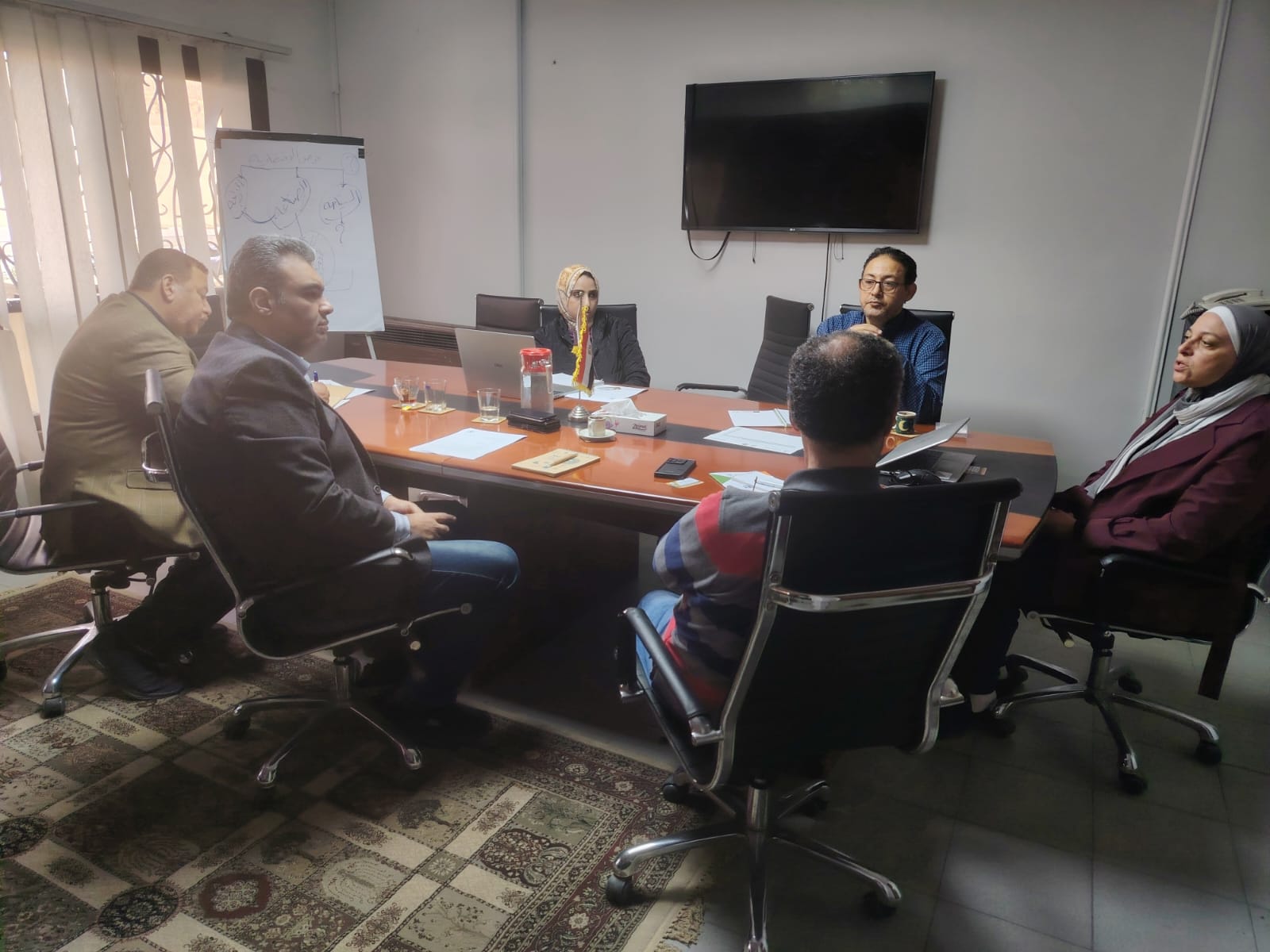
The Arab Network for Environment and Development (RAED) hosted, at its headquarters in Cairo, a high-level delegation from the Ministry of Water Resources and Irrigation to explore opportunities for enhanced cooperation within the framework of the project “Stakeholder Participation to Enhance Drought Resilience through Reinforced Indigenous Knowledge and Smart Tools for Socially-Just Water Management – ABCDryBASIN.” This meeting reflects a growing commitment toward integrated institutional efforts to address water scarcity and climate change challenges.
The Ministry’s delegation included Eng. Mohamed Ibrahim Abdel-Gawad, Head of the Irrigation Development Sector, and Eng. Mahmoud Mostafa, Head of the Central Administration for Water Guidance. Discussions focused on strengthening institutional coordination and activating partnerships between government entities and civil society organizations to address climate change impacts and support sustainable water resources management.
The meeting comes within the Ministry of Water Resources and Irrigation’s broader efforts to expand collaboration with key stakeholders, particularly considering increasing climate-related challenges, foremost among them drought and water scarcity. The drought resilience project implemented by RAED in the governorates of Gharbia, Beheira, and Kafr El-Sheikh represents an important platform for developing innovative solutions that combine traditional knowledge with modern technologies for water management.
The project, implemented with funding from the International Water Institute, aims to enhance local communities’ capacity to adapt to drought impacts by improving water-use efficiency, expanding the use of smart water management tools, and promoting equitable distribution of water resources.
Participants also discussed mechanisms for developing a practical cooperation framework between the Ministry and RAED to ensure complementarity of roles and coordination in implementing project activities. Discussions emphasized the importance of data and information exchange, as well as the development of effective tools to support early warning systems, thereby strengthening communities’ ability to respond to climate risks.
The meeting further highlighted the importance of strengthening the role of media in raising awareness on water and drought-related issues, alongside supporting capacity-building programs for targeted groups, particularly Water User Associations, to enhance their efficiency in managing resources at the local level.
Participants also emphasized the importance of engaging local communities, especially farmers and women, in drought adaptation efforts through the design and implementation of awareness campaigns based on their actual needs. They stressed the importance of providing simplified, practical information on water management and conservation, while also leveraging inherited traditional knowledge and integrating it with modern technological solutions to enhance the effectiveness and long-term sustainability of interventions.