RAED to host eight side events at COP31 in Türkiye
A just energy transition, climate justice and biodiversity conservation top the agenda
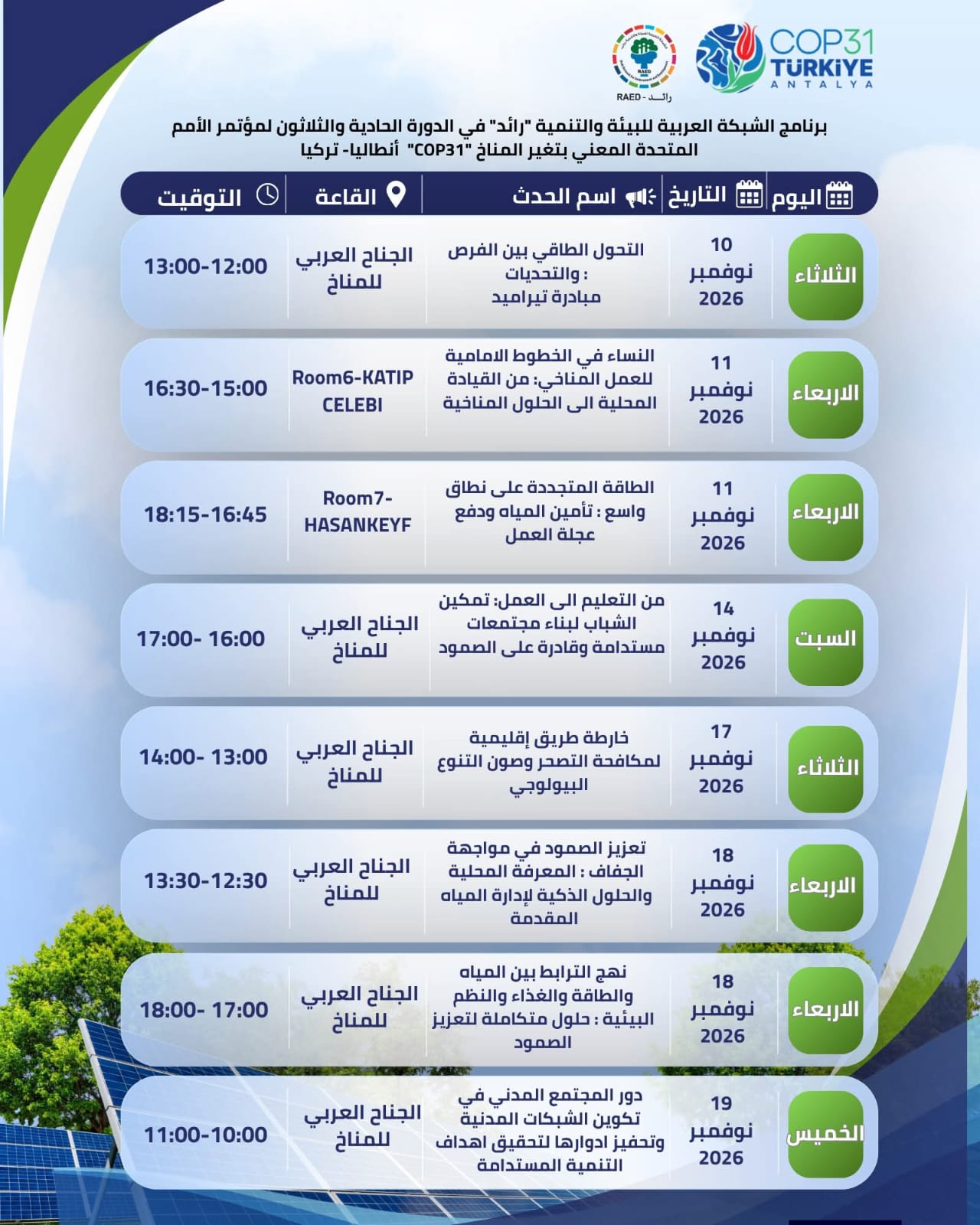
The Arab Network for Environment and Development (RAED) will organize eight side events as part of the 31st United Nations Climate Change Conference (COP31) in Antalya, Türkiye, in November 2026. The programme aims to strengthen Arab civil society’s presence in international environmental forums and will bring together representatives of governments, international institutions and civil society organizations, as well as experts and others working on climate change and sustainable development.
The sessions will provide a forum for exchanging experience and perspectives on environmental and climate challenges facing the Arab region and the wider world. They will explore how climate policy can better support economic and social development and how practical solutions can help communities become more sustainable and resilient to the impacts of climate change.
The programme covers a just energy transition, women’s and youth empowerment, drought resilience, biodiversity conservation and smart water management. It will also examine how civil society organizations and networks can advance sustainable development.
10 November
The Energy Transition Between Opportunities and Challenges: The TeraMED Initiative
12:00–13:00 | Arab Climate Pavilion
RAED will open its programme with a session on changes underway in the energy sector and the opportunities and challenges of shifting to clean energy. The discussion will highlight how to make the transition fair and make the most of the development opportunities it creates.
11 November
Women on the FrontLines of Climate Action: From Local Leadership to Global Climate Solutions
15:00–16:30 | Side Event Room 6 – KATIP CELEBI
The session will highlight women’s role in responding to climate change and explore how to expand their participation in leading local initiatives and shaping climate solutions.
Renewables at Scale: Securing Water and Powering Action
16:45–18:15 | HASANKEYF
The discussion will examine how expanding renewable energy can contribute to water security and how closer coordination between energy and water policies can support sustainable development.
14 November
From Education to Employment — Empowering Youth to Build Sustainable and Resilient Communities
16:00–17:00 p.m. | Arab Climate Pavilion
The session will explore how environmental and climate education can equip young people to address future challenges and put what they learn into practice through initiatives that strengthen community resilience.
17 November
From Rio to Action: A Regional Roadmap to Combating Desertification and Conserve Dryland Biodiversity
13:00–14:00 p.m. | Arab Climate Pavilion
The session will examine the need for a coordinated regional approach to combating desertification, protecting ecosystems and natural resources, and conserving biodiversity to maintain ecological balance and strengthen climate resilience.
18 November
Building Drought Resilience — Local Knowledge and Smart Solutions for Advanced Water Management
12:30–1:30 p.m. | Arab Climate Pavilion
The discussion will focus on combining local knowledge and experience with smart technologies to improve water management and help communities respond to water scarcity and drought.
The Water–Energy–Food–Ecosystems Nexus — Integrated Solutions for Resilience
5:00–6:00 p.m. | Arab Climate Pavilion
The session will explore how managing water, energy, food and ecosystems together can improve resource efficiency, strengthen water, food and energy security, and help communities and ecosystems withstand climate crises.
19 November
The Role of Civil Society in Building and Strengthening Networks to Achieve the Sustainable Development Goals
10:00–11:00 a.m. | Arab Climate Pavilion
The closing session will examine how civil society organizations can build effective networks, improve coordination and strengthen their capacity to help shape policies and development initiatives. It will also consider how these networks can advance the Sustainable Development Goals and address environmental and climate challenges at national and regional levels.
Through the programme, RAED seeks to broaden Arab participation in international climate dialogue and turn discussions into practical proposals and initiatives. The sessions reflect regional priorities, including water, energy and food security, responses to desertification and drought, and biodiversity conservation.
The programme also underscores the role of civil society in strengthening regional and international partnerships and connecting climate policies and commitments with the needs of local communities. That connection can help make climate action fairer, support sustainable development and strengthen resilience to the impacts of climate change.