Collaboration between the Jordanian Association for Combating Desertification and the Engineers Association to Support the TeraMed Initiative in Jordan
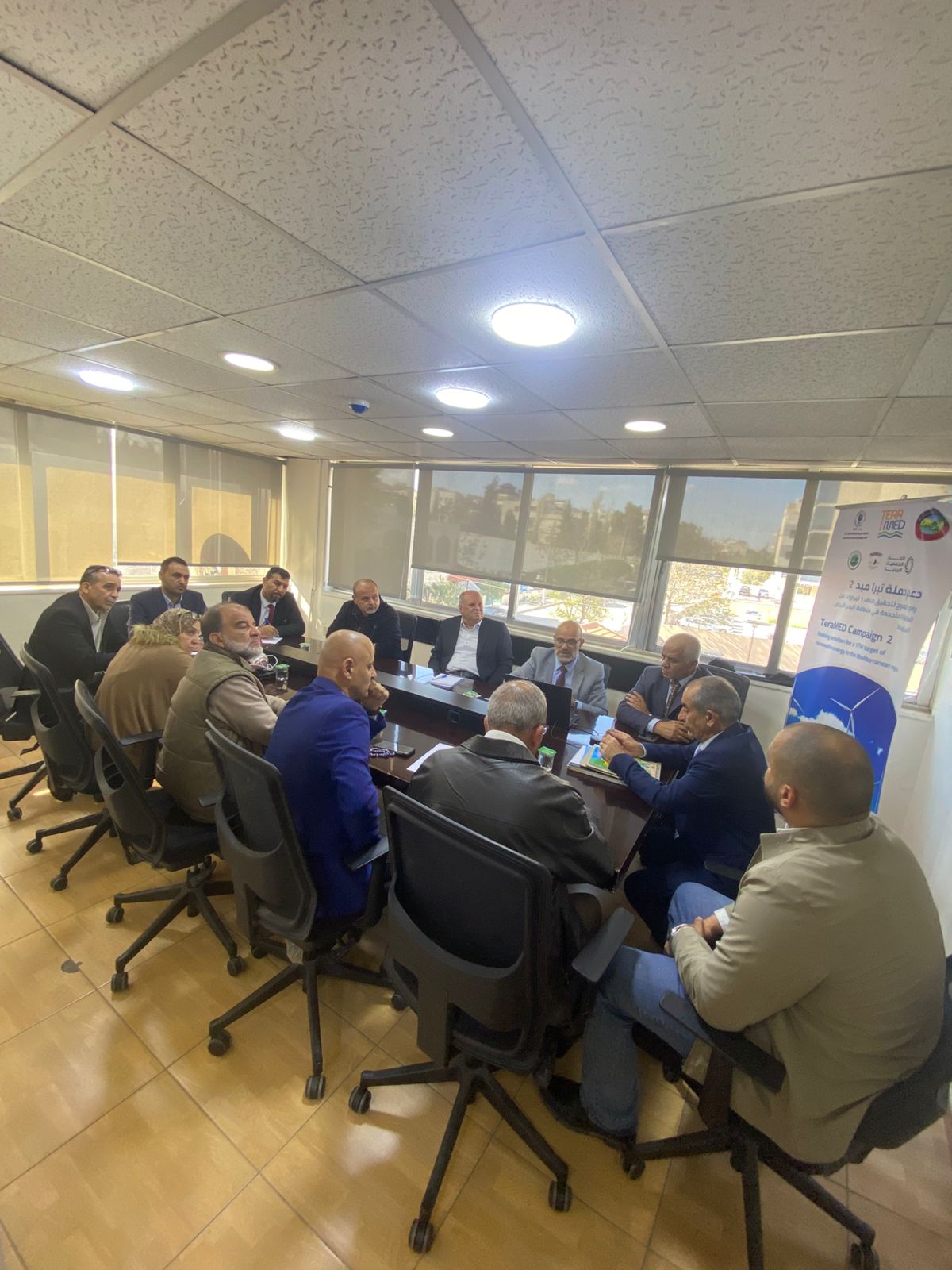
In a step reflecting the growing partnerships among civil society institutions to advance the transition toward clean energy, the Energy Committee of the Jordan Engineers Association hosted a delegation from the Jordanian Association for Combating Desertification and Badia Development in an expanded meeting held on Monday, 20 April 2026. The meeting aimed to explore prospects for joint cooperation and to strengthen efforts supporting the TeraMed Initiative.
This engagement comes within the context of the increasing role played by the Jordanian Association for Combating Desertification and Badia Development, as a member of the Arab Network for Environment and Development (RAED), which leads civil society efforts across the Arab countries of the southern and eastern Mediterranean to support green transition pathways and enhance the integration between energy and sustainable development agendas.
The association’s delegation included several of its leaders and experts, among them Eng. Islam Mghayrah, Eng. Louay Rabbah, and Eng. Fawaz Al-Hamouri, in the presence of Eng. Elia Haddad and Dr. Ismail Al-Atiyat. They were received by Dr. Mohammad Barakat, Chair of the Energy Committee at the Engineers Association, along with committee members and several energy sector experts from academic institutions and the private sector.
During the meeting, Dr. Mohammad Barakat affirmed the Association’s readiness to expand areas of cooperation with the Jordanian Association for Combating Desertification and Badia Development, particularly in the energy sector. He emphasized the importance of complementarity between institutions and civil society organizations in implementing impactful initiatives that contribute to sustainability and enhance resource efficiency.
For his part, Eng. Islam Mghayrah, TeraMed Initiative Coordinator in Jordan, presented the initiative’s vision and strategic objectives, which focus on accelerating a just energy transition in the Mediterranean Basin. The initiative aims to scale up renewable energy production to 1 terawatt by 2030 through integrated partnerships bringing together governments, the private sector, and civil society, while linking energy issues with food and water security and the Sustainable Development Goals.
The Chair of the Energy Committee also expressed his support for organizing a joint workshop to introduce the initiative and raise awareness of its objectives and positive impacts on communities. He underscored the importance of promoting a culture of rational energy use and supporting regional initiatives that contribute to this goal.
In turn, Eng. Ali Nasser, Secretary General of the Engineers Association, stressed the Association’s commitment to supporting and coordinating efforts with relevant stakeholders in line with its strategic vision. He highlighted the Association’s particular interest in supporting environmental organizations and endorsing the TeraMed Initiative, given its alignment with the objectives of the national campaign for energy conservation.
On the sidelines of the meeting, the association’s delegation participated in a specialized workshop on energy efficiency organized by the Engineers Association. The workshop addressed the latest trends in improving energy efficiency and tackling climate change challenges, with the participation of leading experts, including Eng. Ahmed Hamdan, CEO and Founder of Cambridge Engineering Consultancy, and Eng. Lina Mbaydeen, Director of Energy Efficiency and Climate Change at the Ministry of Energy and Mineral Resources.
This collaboration reflects a growing trend toward building effective partnerships between professional institutions and civil society organizations, contributing to the advancement of major regional initiatives—foremost among them the TeraMed Initiative—which represents a vital pathway for achieving a just transition to clean energy in the region and strengthening community resilience in the face of intertwined environmental and economic challenges.