RAED Network Makes a Distinguished Contribution to the Seminar “Rural Women and Cyber Violence: From Prevention to Empowerment”
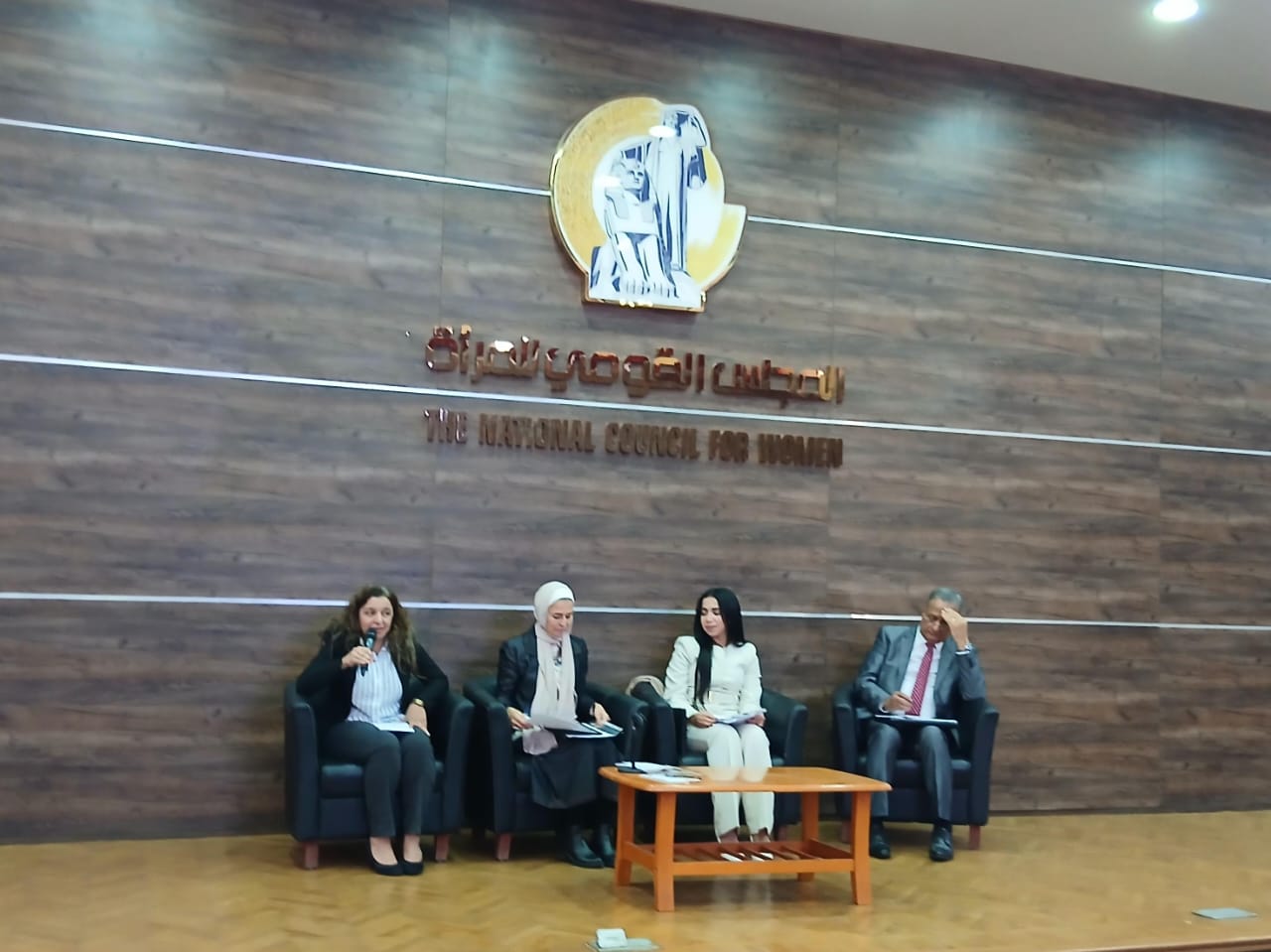
The Arab Network for Environment and Development (RAED) participated in the specialized seminar organized by the National Council for Women under the title “Rural Women and Cyber Violence: From Prevention to Empowerment,” which was held at the Council’s headquarters in Nasr City on Thursday, 27 November 2025. The event brought together a distinguished group of experts and specialists in women’s issues, digital transformation, cybersecurity and social sciences. RAED’s participation came as a continuation of its active role in sustainable development, and in line with its firm belief that the digital empowerment of rural women is a cornerstone for advancing social justice and safeguarding the most vulnerable groups from violence.
The seminar opened with an emphasis on the importance of addressing cyber violence, which has become a direct threat to women, particularly in rural areas, where entrenched customs and traditions intersect with limited digital awareness, increasing risks and reducing women’s ability to report abuse or seek support. The discussions reflected a high level of awareness of an issue that remains relatively new yet is rapidly expanding due to the widespread use of social media.
The session featured rich contributions from several speakers, including Mona Salem, National Coordinator of the Anti-Violence Unit at the National Council for Women, who reviewed the concept of cyber violence and its various forms, ranging from threats, blackmail and bullying to account hacking, as well as the psychological and social impacts of these practices on women. Major General Mahmoud Al-Rashidi, former Assistant Minister of Interior for Information and Combating Internet Crimes, also delivered a presentation on the legal and technical framework governing information technology crimes, explaining reporting mechanisms and avenues for obtaining legal support, while stressing the importance of strengthening women’s capacity to engage with these mechanisms without fear or hesitation.
For its part, RAED’s representatives enriched the discussion from a development perspective, underscoring that the digital empowerment of rural women is inseparable from their role in environmental protection, natural resource management and participation in local development programs. Eng. Rehab Abdel-Fattah, RAED’s representative, highlighted that weak digital awareness in rural areas not only limits women’s ability to protect themselves from cyber violence, but also restricts their economic and social participation and reduces their access to government and service initiatives that are increasingly delivered through digital platforms. She also presented examples of RAED’s previous experiences in environmental and community awareness campaigns, affirming the Network’s readiness to cooperate with the National Council for Women and partner institutions to design training programs that integrate digital security into rural women’s economic empowerment plans.
Dr. Nermeen Al-Kahki, Dr. Hanan Makram, and other experts also provided in-depth insights into the social and cultural factors that make rural women more vulnerable to cyber violence, including fear of stigma, limited access to legal support and weak technical skills. Speakers presented several real-life cases involving blackmail and violations of privacy, adding a strong human dimension to the discussions and underscoring the urgent need for effective prevention and protection programs.
The discussions concluded with a set of key recommendations, foremost among them the need to strengthen digital awareness and integrate digital literacy into traditional literacy programs in rural communities, along with the launch of school-based campaigns targeting both males and females. Participants also recommended stricter legal penalties for cyber violence, support for establishing anti-violence units within primary courts, and the provision of secure electronic platforms for reporting digital crimes. The recommendations further emphasized the importance of cooperation with the Ministry of Communications to swiftly shut down suspicious accounts, encourage the use of digital protection applications, avoid sharing home internet networks with others, and maintain separation between personal and professional online accounts.