RAED Emphasizes the Importance of Building Journalists’ Capacities in Environmental Media and Supporting the Sustainable Development Goals
During an Arab Organization for Dialogue Seminar on Digital Media and Solutions Journalism, the Arab Network for Environment and Development (RAED) emphasized the importance of investing in capacity-building for journalists, media professionals, and content creators as one of the key approaches to strengthening environmental awareness and supporting the achievement of the Sustainable Development Goals (SDGs).
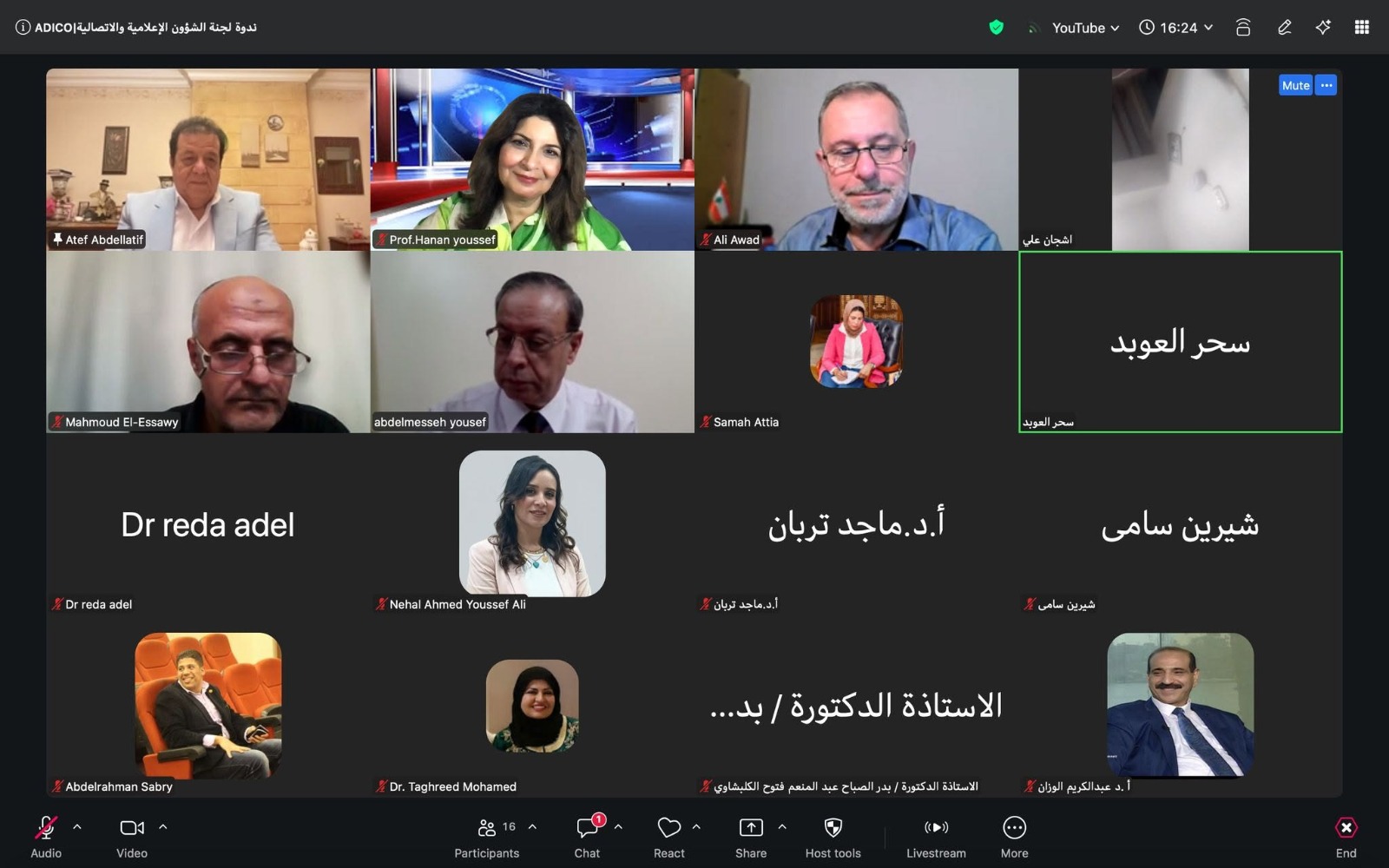
The remarks were made during an Arab seminar organized by the Media and Communication Affairs Committee of the Arab Organization for Dialogue and International Cooperation, in cooperation with the Emirates Volunteering Association, under the theme “The Role of Digital Media and Solutions Journalism in Supporting the Sustainable Development Goals and Promoting Environmental and Tourism Awareness.”
The seminar brought together a distinguished group of academics, experts, and specialists in media, environment, tourism, and sustainable development. Discussions addressed the ongoing transformations in digital media and its role in providing reliable, knowledge-based content that contributes to promoting environmental awareness and strengthening community engagement.
The seminar was opened by Dr. Hanan Youssef, President of the Arab Organization for Dialogue and International Cooperation and President of the Arab Union for Media and Culture. She stressed that digital media has become a key partner in achieving sustainable development and that the current phase requires harnessing digital tools to build an informed and aware society, while establishing Arab partnerships capable of transforming ideas into practical initiatives and implementable projects.
During the seminar, Dr. Abdel-Massih Samaan, Professor of Postgraduate Environmental Studies and Research at Ain Shams University, presented modern approaches to supporting sustainable development. He emphasized the importance of translating development goals into practical programmes whose impact on communities can be measured.
Dr. Atef Abdel Latif, a tourism and economic expert, addressed the growing influence of digital media on tourists’ decisions and their choice of destinations. He noted that digital content has become a major factor in shaping perceptions of tourism destinations and promoting sustainable tourism concepts.
For his part, Dr. Ali Abdel Rahman Awad, an academic and researcher in media and international communication at the Lebanese University, discussed the responsibility of the media in fostering environmental awareness and linking environmental issues to citizens’ everyday challenges, thereby encouraging more positive behaviours towards the environment and natural resources.
In an intervention entitled “The Role of Digital Media in Supporting the Sustainable Development Goals,” journalist Mahmoud El-Eissawy, Editor-in-Chief of Jusoor 2030 and Media Advisor to the Arab Network for Environment and Development (RAED), presented RAED’s experience in using digital media to disseminate environmental knowledge and expand public access to scientific information.
He stressed that digital platforms have become effective tools for transforming environmental information into accessible and engaging content that encourages community participation and promotes the adoption of more sustainable practices.
El-Eissawy explained that RAED places significant emphasis on developing the skills of journalists and media professionals in environmental reporting through training courses, workshops, and the preparation of professional guidelines. These efforts contribute to building specialized environmental media capable of simplifying scientific concepts, countering misinformation, producing evidence-based content, and advancing sustainable development issues across the Arab region.
The seminar featured extensive discussions on the importance of moving beyond seasonal coverage of environmental issues towards continuous and specialized media reporting. Participants also highlighted the role of solutions journalism in presenting successful models and experiences rather than merely documenting problems, thereby helping audiences better understand environmental challenges and participate in addressing them.
Participants concluded the seminar with a number of practical recommendations, most notably the launch of two initiatives aimed at strengthening the role of media in advancing sustainable development.
The first initiative focuses on developing specialized training programmes for journalists, media professionals, and content creators. These programmes would address professional coverage of environmental, development, and tourism issues; the principles of solutions journalism; fact-checking; simplifying scientific data and terminology; and producing impactful digital stories.
The second initiative aims to produce accessible and engaging environmental content, including articles, infographics, short videos, and digital stories, while highlighting successful Arab initiatives and inspiring experiences in the fields of environment and development.
The two initiatives were proposed by Dr. Nehal Ahmed Youssef, Vice-Chair of the Media and Communication Affairs Committee, and journalist Samah Attia, Rapporteur of the Committee, with the support of Dr. Hanan Youssef. The speakers, led by RAED’s representative, expressed their readiness to contribute to the implementation of the two initiatives, with a view to strengthening cooperation among academic institutions, media organizations, and civil society organizations.
The seminar concluded by emphasizing that building specialized Arab media capable of effectively addressing environmental and development issues is no longer an option, but a necessity in the face of accelerating climate and environmental challenges.
Investing in the training of media professionals and developing their professional tools was highlighted as a fundamental pillar for achieving the Sustainable Development Goals and enhancing public awareness. This is a priority that RAED continues to advance through its regional programmes, which aim to develop a new generation of journalists capable of producing professional and influential content that serves people, the environment, and sustainable development.